PBOC Chief Sees Currency Competition as Dollar Dominance Falters
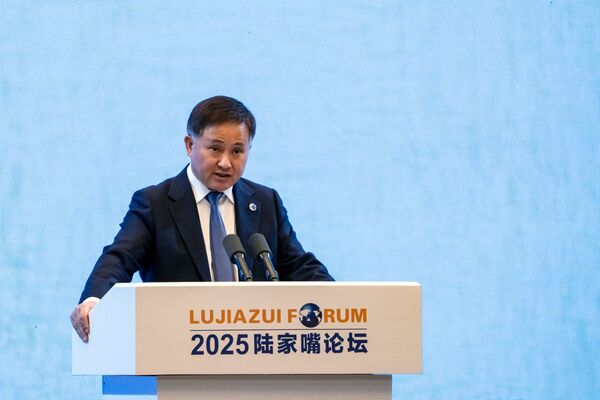
People’s Bank of China Governor Pan Gongsheng laid out in the clearest terms yet his vision for the future of a new global currency order after decades of dollar dominance, predicting a more competitive system will take root in the years to come.
“In the future, the global monetary system could continue to evolve toward a situation where a few sovereign currencies co-exist, compete and check and balance each other,” Pan said Wednesday in a keynote speech at the annual Lujiazui Forum in Shanghai.
Pan said there have been discussions around the world on how to reduce excessive reliance on a single currency, adding that the yuan’s global status has risen in recent years.
Confidence in the US is waning after months of Donald Trump ’s erratic policymaking since returning to the presidency. Investors have been trimming dollar holdings of late, prompting European Central Bank President Christine Lagarde to talk about a potential “ .”
China has also been positioning the yuan as a rival to the US dollar. It’s an extension of efforts by President Xi Jinping to build China into a financial power with a currency that’s stable enough to play a rising role in global trade, especially as tensions with the US erupted during Trump’s second term.
The tariff risks this year have intensified that effort, with some US for settlement in alternative currencies, including the yuan, to contain the impact of the dollar’s swings, according to an official at US Bancorp.
The global monetary system’s evolution toward a more multi-polar pattern can make it more resilient, according to Pan. It’s also beneficial to global financial stability, and can push countries to improve their policy discipline, he said.
One of the options is to promote a super-sovereign currency, and International Monetary Fund reserve assets known as special drawing rights, or SDRs, have been considered a choice, according to Pan.
But there’s a lack of consensus on promoting them as an international currency, and there needs to be more regular and larger issuance of SDRs in order to achieve it since the asset is now primarily used in times of crisis, he said.
“The situation where a single sovereign currency dominates cross-border payment is changing gradually,” Pan said.