Japan’s Political Uncertainty Sends Yen Higher: Markets Wrap
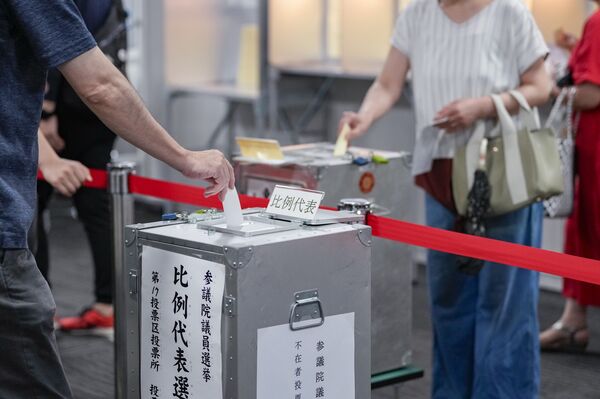
The yen strengthened after Japan’s ruling coalition suffered a historical defeat in the weekend’s upper house election, setting the stage for political uncertainty. Asian markets are poised for a mixed start.
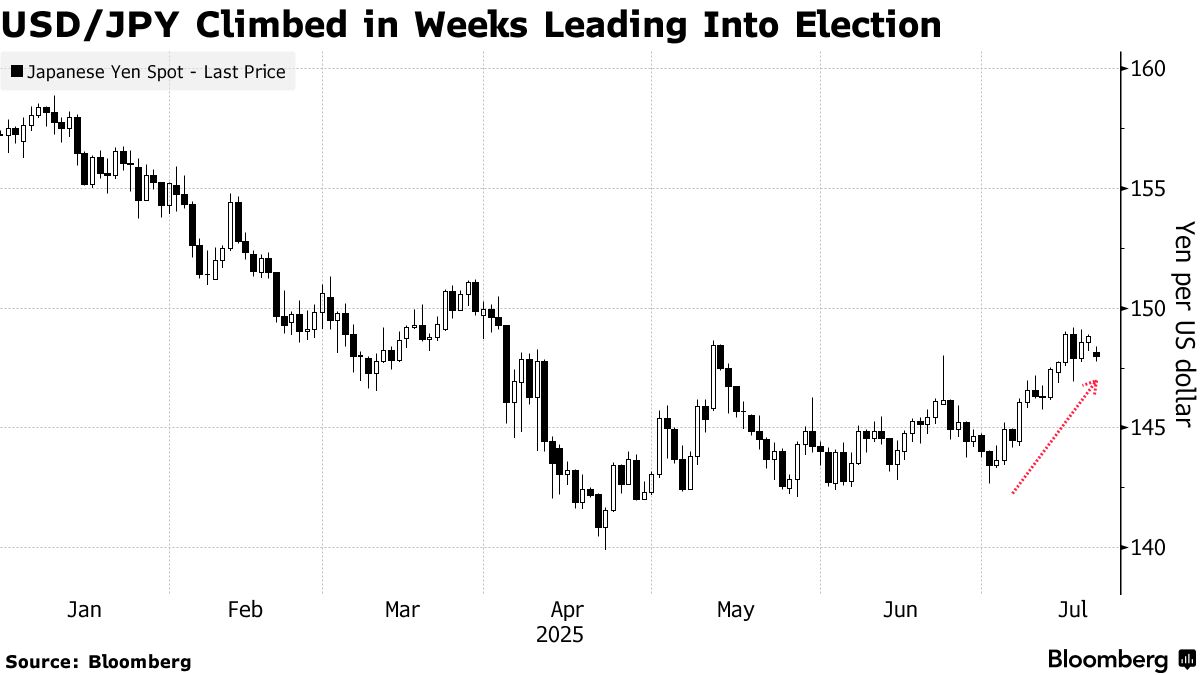
Japan’s currency rose as much as 0.7% against the dollar, before paring back gains, after public broadcaster NHK reported that the ruling Liberal Democratic Party along with longtime partner Komeito lost its majority in the chamber. Nikkei stock were little changed, while onshore markets are closed for a holiday.
Prime Minister Shigeru Ishiba will now try to govern with some support from the opposition. It’s the first time since 1955 that a leader from the storied Japanese party will govern the country without a majority in at least one of the legislative bodies.
“Uncertainty usually tends to favor the yen, at least initially,” said Rodrigo Catril , currency strategist at National Australia Bank in Sydney. “Overall, the election outcome is not good news for Japanese assets and we would look to fade yen strength.”
Traders had been on tenterhooks for weeks ahead of the election, with concerns that a poor showing by Ishiba’s party would open the door to more government spending and tax cuts. That’s put the yen under pressure and sent Japanese government bond yields to multi-year highs.
US equity futures were flat in early trading after the S&P 500 closed little changed on Friday. Donald Trump pushed back on a report that Treasury Secretary Scott Bessent advised the president markets would react badly if he fired Federal Reserve Chair Jerome Powell.
“Powell’s removal as Fed Chair remains unlikely, and even in such a scenario, it is hard to see the other governors voting for cuts if the economic backdrop didn’t warrant them,” Barclays strategists including Themistoklis Fiotakis wrote in a note to clients. “Outside of this headline noise, there have been signs of dollar consolidation, perhaps as a reflection of a changing reaction function to tariffs by markets.”
Futures indicate Australian shares may fall in early trading while Chinese stocks may edge higher.
Eyes in Asia will soon focus on Chinese loan prime rates on Monday. China’s commercial banks are likely to keep their rates unchanged for a second straight month, taking cues from the People’s Bank of China as growth data shows signs of resilience, according to Bloomberg Economics.
“With second-quarter GDP data showing broad resilience in the economy amid a 90-day trade-war truce, the central bank is probably in no rush to ease,” BE economist Eric Zhu wrote in a note. “Given their narrow net interest margins, banks don’t have a strong incentive to reduce lending rates without further PBOC cuts.”
Some of the main moves in markets:
Stocks
Currencies
Cryptocurrencies
Commodities
This story was produced with the assistance of Bloomberg Automation.