Traders Are Primed for More Yen Losses as Political Risks Mount
The Japanese yen has underperformed all its major peers in the past three months, and it may be at risk of further declines as political risks mount.
Strategists are bearish on the currency, predicting that Japan’s election outcome will drive up government expenditure, while the impact of US tariffs may still slow the pace of . The sentiment jives with the view of options traders who are positioning for another drop in the yen.
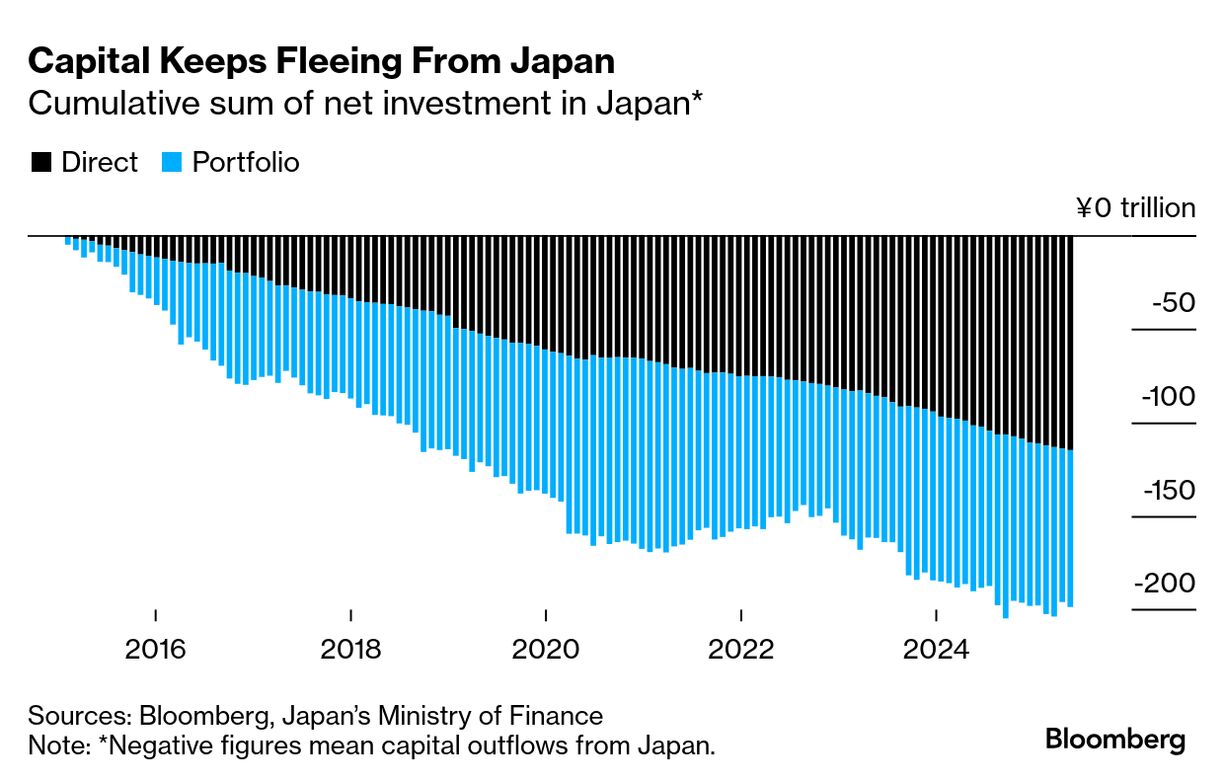
The ruling Liberal Democratic Party’s loss in the July 20 polls has become the defining factor for Japan’s currency as analysts warn that Prime Minister Shigeru Ishiba may resort to populist spending to shore up support for his weakened coalition. A $550 billion US negotiated as part of a trade deal may also spur capital outflows and weigh on the yen in the long run.
Read more:
“While the election has passed, there are still some political risks with the potential for PM Ishiba to step down and for an LDP leadership election in September,” said Derek Halpenny , MUFG Bank’s head of global markets research. “USD/JPY call demand likely also reflects expectations of Governor Ueda refraining from signaling a rate hike soon, given the short-term risks for growth and inflation are skewed to the downside.”
Dollar-yen call options gain in value if the currency pair rises and are a hedge against a weaker yen.
Dollar-yen call option trades show that wagers for the currency pair to rise outnumber those betting on a drop by nearly four to one, according to data from the Depository Trust and Clearing Corp on July 28.
The pessimism stands in contrast to the view of asset managers who boosted net long positions in the yen in the week ending July 22, data from the Commodity Futures Trading Commission show. Similarly, leveraged funds trimmed their wagers against the currency during that period.
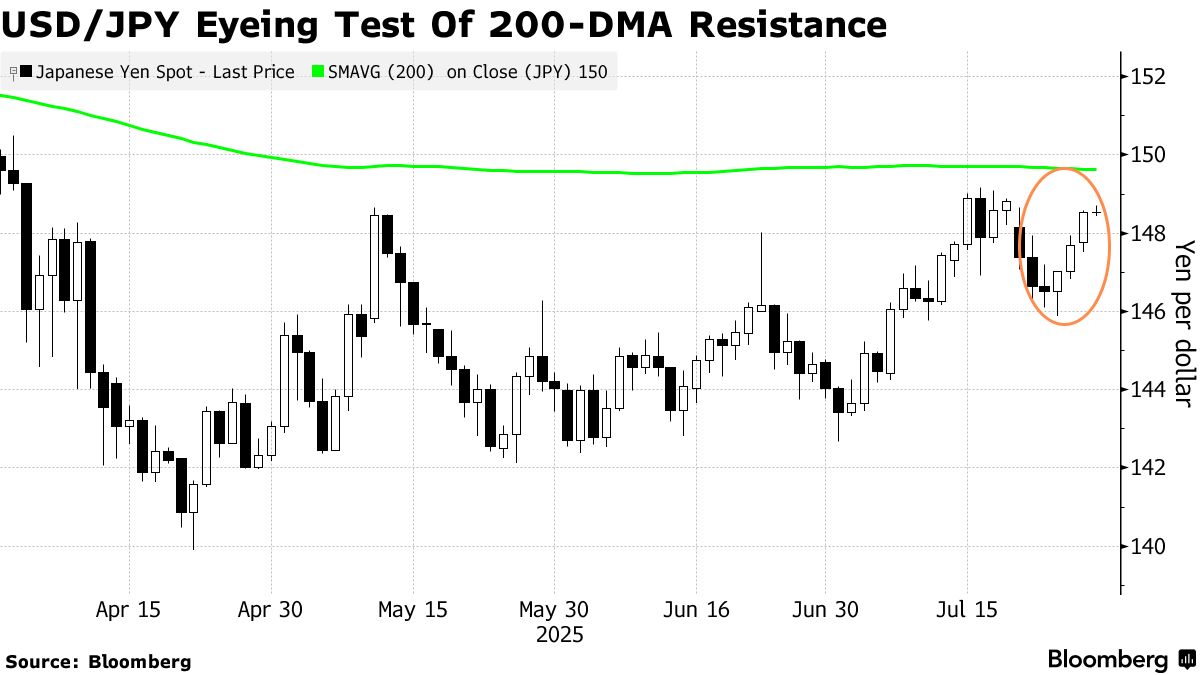
The yen has weakened around 6% to 148.27 per dollar since climbing to a seven-month high in April, due in part to concerns about Japan’s election.
Market participants who are betting against the yen expect Ishiba to give in to opposition calls for costly tax cuts to boost support for his coalition. Some analysts say that if Ishiba steps down, he may be by Sanae Takaichi, a vocal supporter of fiscal and monetary stimulus, who narrowly lost to him in the race to lead the LDP last year.
“Regardless of the eventual political outcome, fiscal policy is likely to follow a more expansionary path,” Barclays Securities strategists including Shinichiro Kadota wrote in a note. “Should expansionary fiscal policies be pursued, USD/JPY could rise above 150, given its recent sensitivity to movements in the super-long term premium.”
A further decline in Japan’s currency could fuel a return of the popular carry trade strategy which involves borrowing the relatively low-yielding yen and investing in other currencies offering higher returns.
“We’re seeing engagement on dollar-yen topside for a few reasons — broad market positioning for weaker dollar seems overdone and dollar-yen long provides excellent carry over a sedate summer period,” said Sagar Sambrani , a senior foreign-exchange options trader at Nomura International Plc in London.
Read more:
Some are more optimistic about the yen’s prospects, if only because they expect the greenback’s recent strength to be short-lived.
While Japan’s proposed US investment fund is likely to spur outflows, the yen will probably climb to 142-143 against the dollar this year as the Federal Reserve lowers interest rates, according to Ayako Sera , market strategist at Sumitomo Mitsui Trust Bank.
The Bank of Japan’s policy decision due Thursday may help determine the currency’s near-term direction. Investors will parse Governor Kazuo Ueda ’s comments to try to gauge when the next interest-rate hike will take place, with officials said to be seeing the possibility of mulling another this year.
Overnight index swaps are pricing in a 74% chance of a BOJ rate hike by year-end. The odds stood at 59% last Tuesday before the two nations reached an agreement that set a 15% tariff on Japanese goods heading to the US.
Some strategists think that while the tariff is lighter than the 25% originally threatened by the US, it is still well above the level at the start of the year and will have an impact on the economy.
The BOJ needs time “to see what’s the real impact of these tariffs, so I think they’re on hold,” said Bart Wakabayashi , Tokyo branch manager at State Street Bank & Trust, adding that Japan’s currency may weaken past 150 this year. “There are not a lot of positives for the yen.”