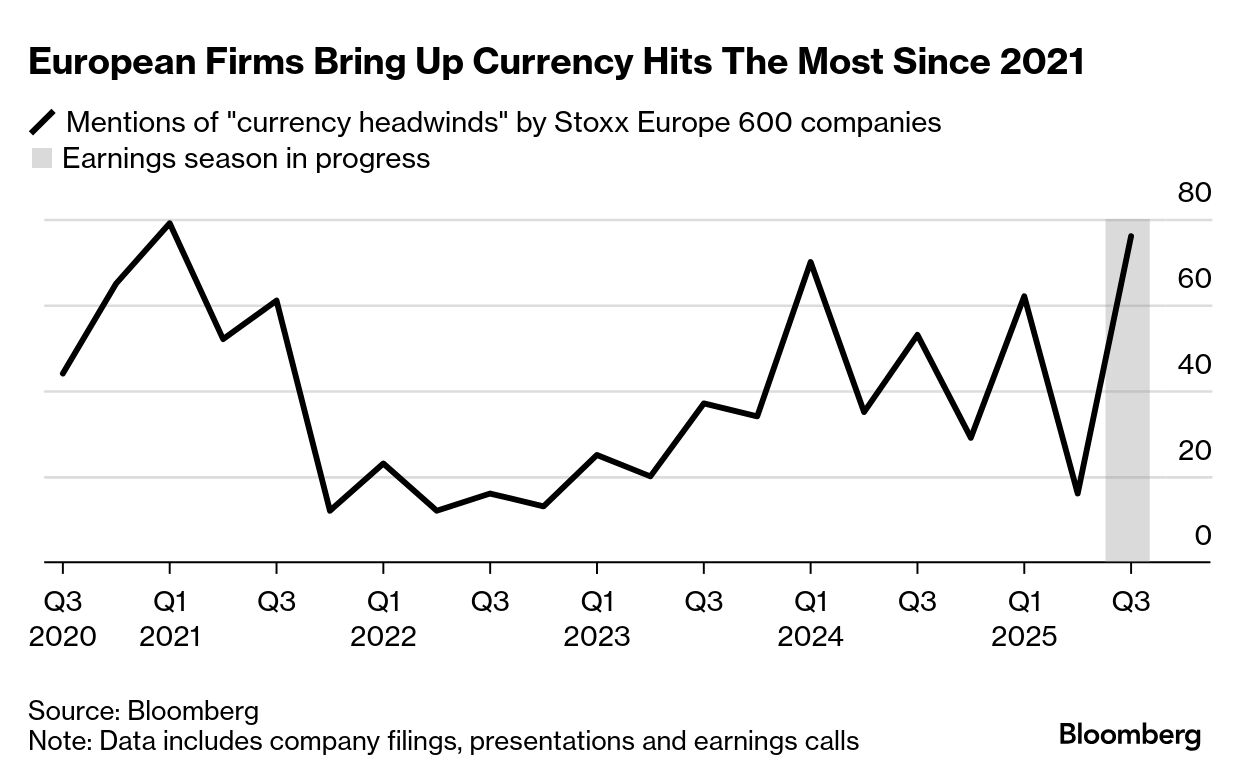
European Firms Are Most Worried About FX Swings in Four Years
European companies are the most worried about the impact of currency fluctuations in four years, with the euro’s strength in 2025 eating into earnings outlooks.
Mentions of “currency headwinds” in filings and earnings calls among Stoxx Europe 600 companies that have reported so far have risen to the highest level since the first quarter of 2021.
Despite a recent rally, the dollar has plunged about 10% against the euro in 2025 amid unease with the US administration’s economic agenda, in particular President Donald Trump ’s tariff policies. The euro has also been propped up by rising confidence in Europe’s economic prospects as nations promised fiscal stimulus.
European exports that generate a large part of their sales in dollars are making less when repatriating earnings from US operations, while a stronger euro makes their goods less competitive in American markets.
Software giant , Europe’s most valuable company, expects currency fluctuations to shave growth by 3.5 percentage points in its cloud division as it deals with a declining dollar in the US, its largest market.
A stronger euro contributed to revenue for . Finland’s cited a weaker for cutting its profit guidance and projecting a roughly €230 million hit from currency fluctuations. Swedish industrial heavyweights from to warned that a weak dollar against the Swedish krona will put on earnings in 2025.
While European companies have generally described the tariff hit as broadly manageable — having passed on price increases to consumers, rerouted trade flows or cut costs elsewhere — the negative impact of currency fluctuations was an unwelcome surprise.
“Most of the companies were unprepared for this kind of euro strength, because the narrative as a whole coming into the start of the year was that a Trump presidency would be positive for Europe and that, if anything, the euro was going to go lower,” Magesh Kumar , an analyst at Barclays, said in an interview. “So I don’t think many corporates had enough hedges in place.”
Industrial companies, which are particularly exposed to trade shocks due to their global supply chains and manufacturing footprints, are the most concerned about currency headwinds this earnings season, the data shows.
European industrial companies’ pricing and supply bases, which they diversified during the pandemic, could help mitigate the direct effects of US tariffs, but they “won’t shield profit from the resulting currency headwinds and indirect demand hit globally,” Bloomberg Intelligence analyst Omid Vaziri wrote in a note .
The consumer discretionary sector, which includes carmakers and luxury labels, is also exposed, alongside health care, which generates a large part of its revenue in dollars. Domestically oriented names like banks and utilities are better protected, widening the gap in growth expectations between tariff-sensitive and tariff-shielded sectors.
“Generally when currency has been a headwind, it has also been accompanied by strong growth,” Kumar said. “But this time the growth backdrop is not great, and then you have a very strong rise in currency, so that’s a double whammy for a lot of these export-oriented names.”
The worst could be behind as companies put more currency hedges in place in the second half of the year, and as fluctuations in the euro and the dollar normalize. The Bloomberg Spot Dollar rose to its in more than a month earlier this week on expectations of economic resilience, while the euro is retreating amid concern over the economic impact of the EU’s recent trade deal with the US.
“The effects should start to ease a little bit,” Kumar said. “We’re probably close to the bottom.”