Currency Hedging Gets Expensive Again Ahead of US Jobs Report

The cost of hedging in the currency market is rising after the , with traders positioning for wider price swings around Friday’s key US jobs report.
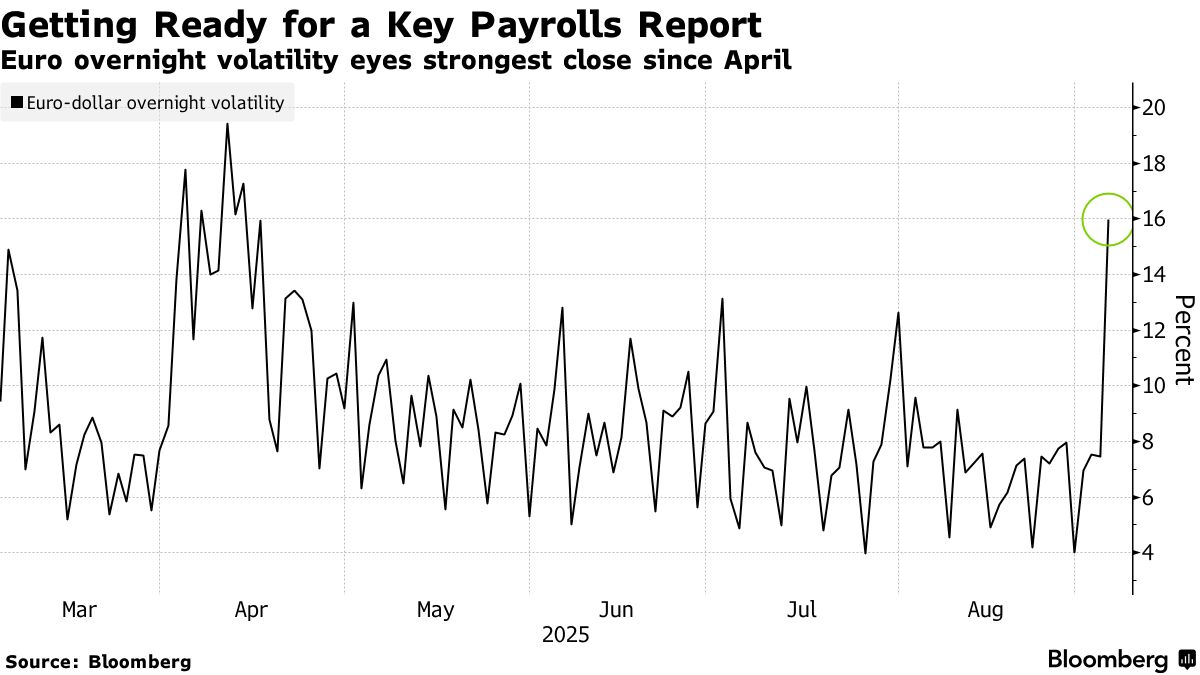
One-day euro-dollar implied volatility rose to the highest level since June on Thursday, and is on track for the strongest close since April.
The jump reflects the importance of the payrolls data for traders to gauge the Federal Reserve’s next steps after Chair Jerome Powell said in a speech last month that “downside risks to employment are rising.” Data Wednesday showed US job openings fell to a 10-month low in July, raising the stakes for Friday’s report. A soft print could fuel bets on deeper Fed easing, sending the dollar weaker.
“August non-farm payrolls will guide whether markets start to price in a 50 basis-point Fed funds rate cut” on Sept. 17, compared with current pricing of 25 basis points, said Elias Haddad , a strategist at Brown Brothers Harriman.
Payrolls aren’t the only driver. A broad gauge of expected swings in Group-of-10 currencies hit a one-month high this week as risks stacked up, from UK fiscal worries and French politics to geopolitical tensions, a string of central bank meetings, and worries over the independence of the Fed.
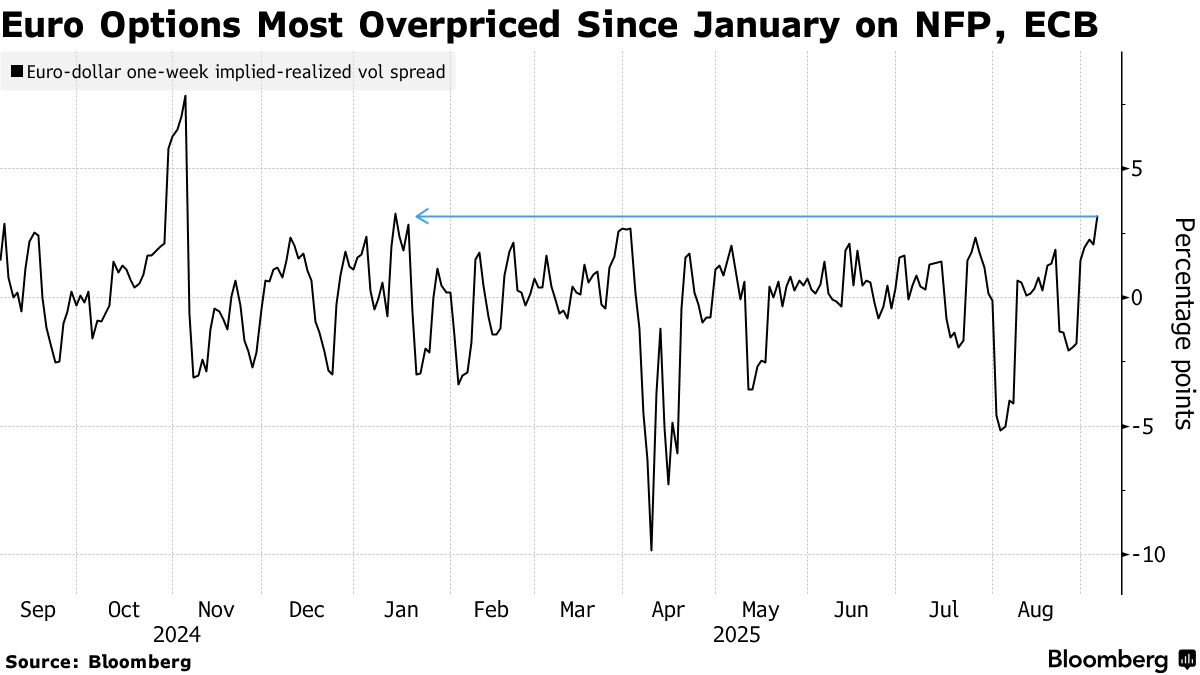
One-week euro volatility reached a two-month high on Thursday as the tenor now covers both the next European Central Bank meeting and US inflation data. A closely watched options measure, tracking the gap between implied and realized volatility, shows contracts are the most overpriced since January.
While no policy change is expected from the ECB, forward guidance remains crucial after from policymakers that opened the door for interest rate increases. US CPI on Sept. 11, along with Friday’s payrolls, could shape the tone of the Fed’s meeting this month.
The pound is also drawing hedging demand. Three-month relative costs rose to the highest since January as traders position for potential market moves around Chancellor Rachel Reeves ’s budget on Nov. 26.
Global concerns about fiscal policy are creating a “ perfect storm ” of rising yields and pound weakness, according to Deutsche Bank AG’s George Saravelos .