Yen, Bonds Add Pressure on Takaichi Ahead of Meeting With Ueda
Japanese Prime Minister Sanae Takaichi faces mounting pressure to soften her stance on Bank of Japan policy and unveil an economic package with a credible funding plan as the yen and government bonds lose ground ahead of her meeting with BOJ Governor Kazuo Ueda .
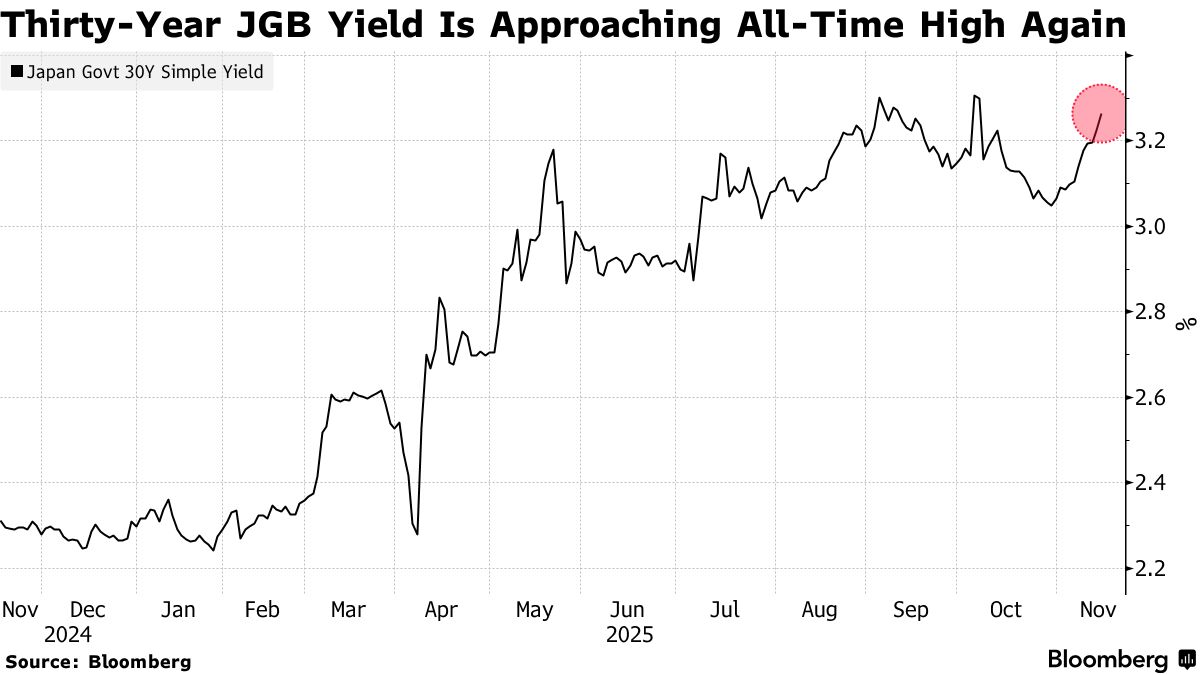
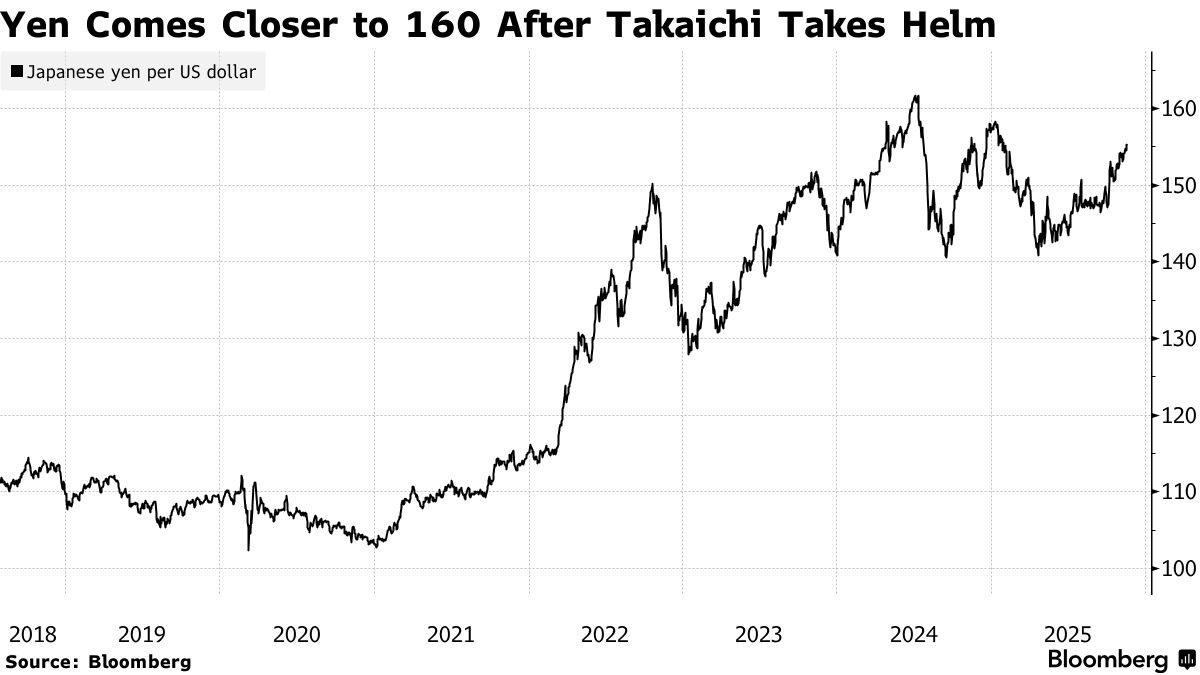
The yen weakened to 155.38 per dollar Tuesday, the lowest since January, amid rising speculation that the BOJ will delay any rate hike while Takaichi compiles a larger-than-expected spending plan to be released as early as this week. Japan’s 20-year bond yield rose to its highest since 1999 on Monday owing largely to renewed concerns that the economic package will add to the nation’s pile of debt.
Takaichi is scheduled to meet with Ueda at 3:30 p.m. at the prime minister’s office in Tokyo. Any remarks from the two following their discussions will be parsed closely by BOJ watchers to anticipate the timing of the next rate increase, which most predict will come no later than January.
The two will meet a day after a government report showed Japan’s economy over the summer by 1.8% on an annualized basis, the first fall in six quarters, as the impact of construction industry regulatory changes and US tariffs weighed on activity. Some economists were of the view that the GDP report wasn’t as bad as indicated by the headline figures, but the contraction will nonetheless likely strengthen Takaichi’s resolve to compile an ambitious spending plan.
“Takaichi has to be careful, as if she directly requests a freeze on rate hikes for now, it would push down the yen easily past 160,” said Tsuyoshi Ueno , chief economist at NLI Research Institute. “Takaichi will probably indicate her support for no early rate hike in a very nuanced way, while Ueda reiterates the BOJ’s rate hike stance.”
Read more:
The size of fresh spending contained in the economic measures is expected to surpass last year’s ¥13.9 trillion ($89.5 billion), according to a Bloomberg survey. A group of a ruling Liberal Democratic Party members advocated for making the package about ¥25 trillion on Monday, according to local . Japan has the world’s largest public debt burden among developed nations.
Takaichi, a proponent of easy monetary policy, has suggested she backs an approach that would see the BOJ raise borrowing costs only slowly, indirectly giving currency traders a green light to sell the yen. A cheaper yen makes imports costly, hindering her efforts to mitigate the pain of elevated inflation on households. So far she’s addressed the issue with pledges for steps including a cut to gasoline taxes and utility subsidies.
With the BOJ’s next policy decision more than a month away, traders are on alert to the risk of currency intervention by the Ministry of Finance. Satsuki Katayama , the finance chief, reiterated her concerns earlier Tuesday, citing one-sided, rapid moves in the market.
If Takaichi chooses to explicitly state her desire to avoid rate hikes over the near term, she’ll risk exposing herself to pressure from the US. In a highly unusual step for a US Treasury Secretary, Scott Bessent last month urged Takaichi’s government to give the BOJ space for a policy change to address inflation.
Read more:
The yen has been a frequent source of headaches for Japan’s authorities. In July last year, the currency slipped to as low as 161.95, the weakest since 1986, prompting the government to buy the currency via market intervention. The BOJ then raised rates a few weeks later, a surprise to investors that helped spark global financial market turmoil.