Goldman Sees No Immediate Intervention Risk as Yen Nears 155
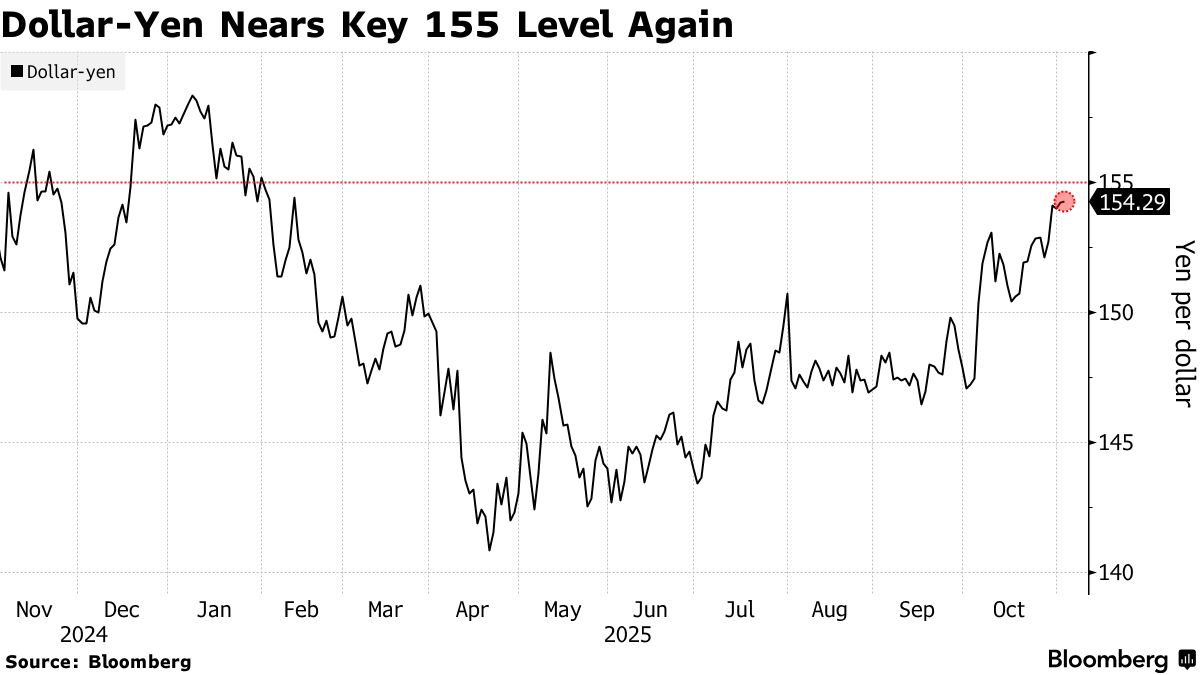
Goldman Sachs Group Inc. sees little immediate risk of currency intervention in Japan, saying the usual triggers “have not yet been met” even as the yen approaches 155 per dollar.
The yen “does not appear to be at particularly weak levels,” strategist Karen Reichgott Fishman wrote in a note dated Monday. Recent underperformance has been driven largely by a repricing of Japan’s fiscal risk premium and near-term Bank of Japan rate expectations, she said.
The yen slid about 4% against the dollar in October, making it the worst performer among G-10 currencies. The selloff came as markets digested Prime Minister Sanae Takaichi ’s perceived tilt toward fiscal expansion and dovish monetary policy. The currency weakened further after BOJ held rates steady last week with Governor Kazuo Ueda offering little guidance on future hikes, saying the central bank wasn’t at risk of falling behind the curve.
The currency depreciation triggered verbal intervention from officials. Finance Minister Satsuki Katayama said Friday that authorities are monitoring currency movements, including those driven by speculation, with a high sense of urgency.
Read more:
Japan’s Ministry of Finance last intervened in the forex market in 2024, stepping in at levels around 157.99, 159.45, 160.17 and 161.76 per dollar. Authorities have stayed on the sidelines for over a year.
Goldman said that the finance ministry should have about $270 billion of available funds for intervention before having to sell longer-term securities, giving it the capacity to match the sizes of the most recent interventions in 2022 and 2024.
Fishman noted that the yen could still weaken further if a lack of key US data prevents markets from questioning the growth outlook, or if political attention shifts back to a possibility of early elections in Japan.
Over the longer term, the bank expects the yen to appreciate gradually as hedging costs fall and the dollar weakens. That move could accelerate if US labor market data deteriorate. However, greater-than-expected fiscal stimulus in Japan — particularly if seen as limiting the BOJ’s ability to tighten — or renewed US economic outperformance could undermine that view.
Read more: