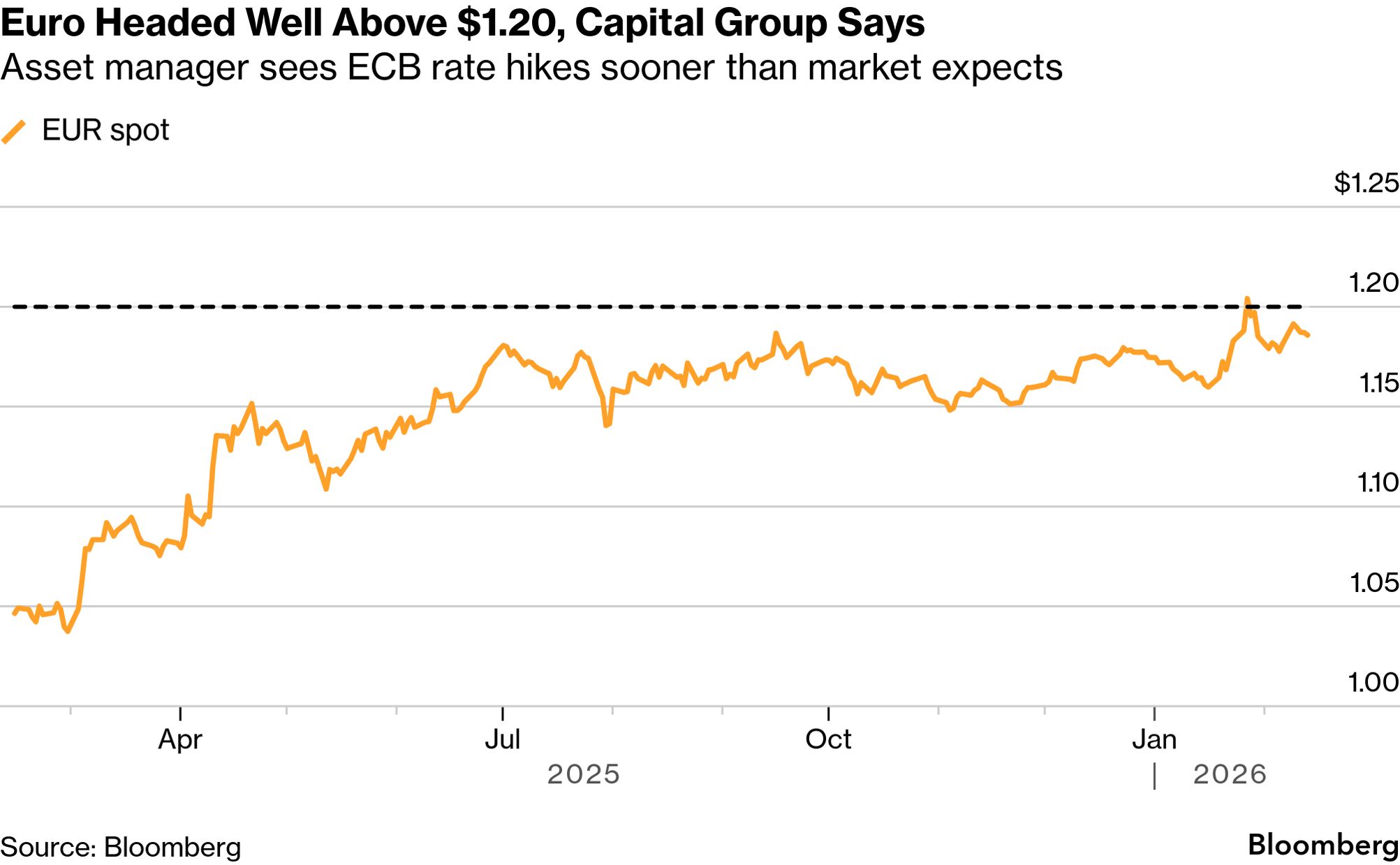
Capital Group Bets on ECB to Hike Rates in 2026, Boosting Euro
The European Central Bank will raise interest rates at least once this year, significantly boosting the euro against the dollar, according to Capital Group, the $3.3 trillion asset manager.
The view runs contrary to many investors and economists who expect the ECB to remain on hold through 2027. Some even reckon it may should US rate cuts under a new Federal Reserve Chair force its hand. Money markets currently price a less than one-in-three chance of a quarter-point reduction.
But Edward Harrold , investment director at Capital Group, expects a pickup in economic growth across Europe that will prompt the ECB to to diverge from the Fed. That should lift the euro to the “high-$1.20s area” by year-end, he said in an interview. It traded Friday at around $1.1860.
“One of our more non-consensus views is that we could see tighter monetary policy in Europe sooner than the market has been pricing,” Harrold said, noting Germany’s plans to expand spending.
“We expect to see European growth becoming more robust, more inflationary pressures coming through,” Harrold said. “We think this will bring the ECB to potentially begin hiking before the end of this year.”
“We have a definite preference for the euro over the dollar,” he added.
Harrold expects one or two rate hikes from the ECB’s current 2% level and sees the Fed easing policy broadly in line with market pricing, delivering two to three cuts in 2026. While some recent data has been softer than expected, there’s also a view that the Trump administration will want to run the economy hot before mid-term elections in November.
“That will mean we get lower rates in the US but still kind of resilient inflation, so a lower real yield at the same time as we see real yields picking up in Europe,” Harrold said. “That will lead to a continuation of the positive euro/weaker dollar dynamic.”
The euro area’s real policy rate is currently just under 0.5%, about half that of the US.
The view on the euro hinges on a lot of “moving parts,” including the US labor market’s , Harrold said.
“We don’t think that’s yet enough for the Fed to pull back from what’s being priced, but if that continues, we won’t see the same degree of cuts in in the US and then that will play through in terms of euro/dollar,” he said.