Indian Rupee Needs Stronger Foreign Inflows to Sustain Rebound
The rupee’s recent rebound from a record low may be fleeting, with analysts predicting renewed weakness in the months ahead on inadequate foreign inflows.
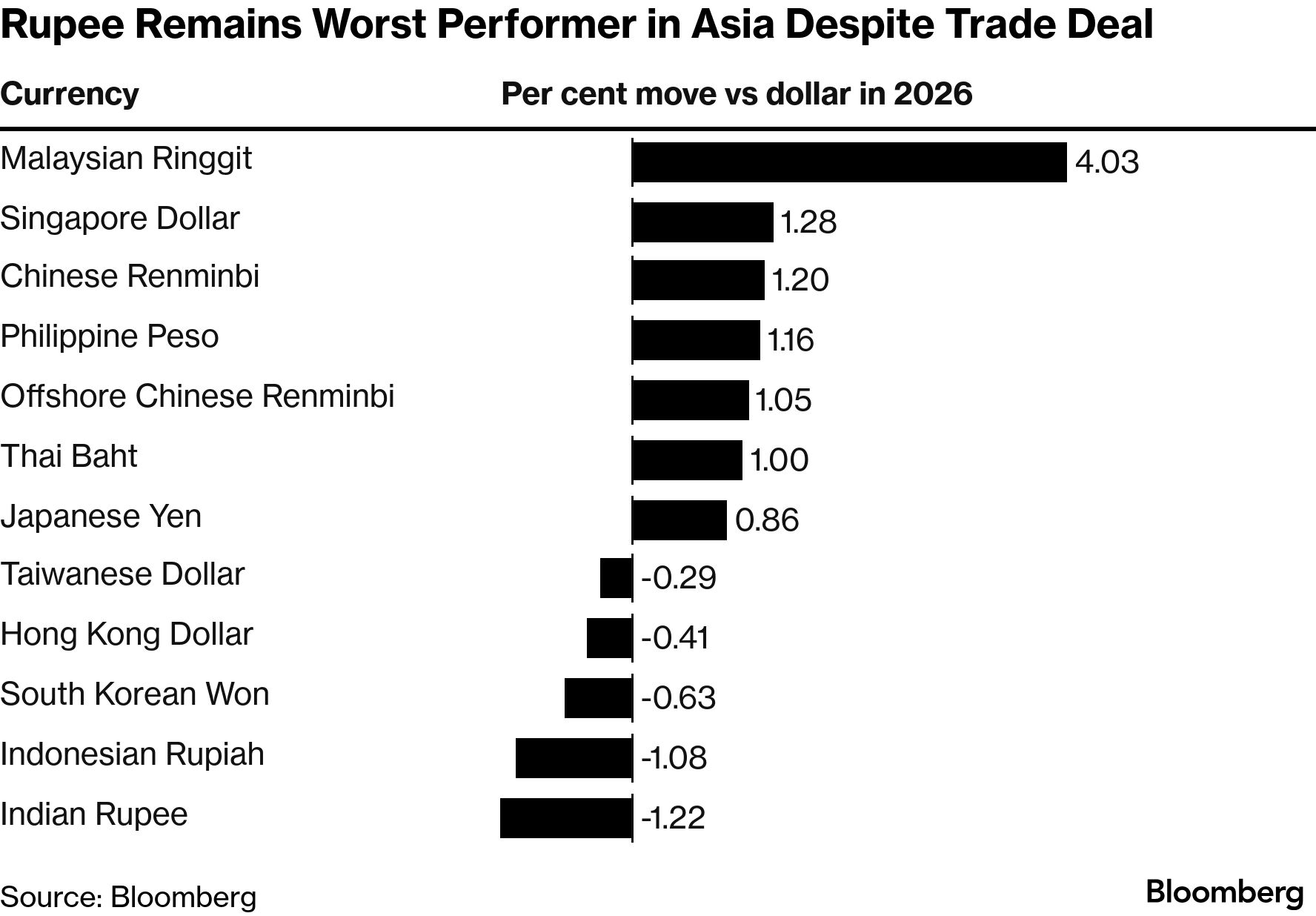
, Australia & New Zealand Banking Group Ltd. , and MUFG Bank Ltd. expect the rupee to decline to 93 per dollar by the year-end, more than 2% weaker from its current level . The currency has trailed Asian peers in the past two weeks, erasing part of its gains after the US cut tariffs on India earlier this month.
The bearish outlook is notable because the US trade pact was expected to lure global funds after the currency hit successive lows, making it most undervalued in nearly 12 years. Stretched equity valuations , limited presence of pure-play names, and a rising interest-rate gap with global markets may continue to weigh on inflows and the rupee, according to analysts.
A rise in long-term yields in the US and Japan has made investors more discerning in their allocations to risk assets, which particularly hurt markets such as India, said Dhiraj Nim , forex strategist at ANZ in Mumbai. “The reversal of flows has been very mild” and “rest of the factors haven’t really been resolved.”
The outlook for the rupee may also be clouded by renewed after the US Supreme Court on Friday struck down several of President Donald Trump’s tariffs, even as he moved to impose a new global levy.
Read More:
Overseas investors have resumed buying Indian equities, with net purchases of $1.7 billion so far this month compared with an outflow of $3.3 billion in January. The inflows pale in comparison to China, Japan and Taiwan, and may barely cover the between India’s imports and exports.
Meanwhile, high gold prices are expected to push India’s current account deficit to 1.5% of the gross domestic product in the fiscal year starting April 1, from around 1% this year, according to IDFC First Bank Ltd. Foreign direct investment, which has traditionally been a stable source of overseas capital buoying the rupee, is also .
“The fundamentals of rising gross FDI repatriation for 2026 have not changed, and foreigners are likely to continue taking profits on their investments in India, which will put pressure on the rupee to weaken,” MUFG Bank’s senior currency analyst Michael Wan wrote in a note.
A renewed slide in the rupee could stoke imported inflation, complicate the Reserve Bank of India’s rate path just when it’s near the end of its easing cycle, and erode returns on local bonds and equities for overseas funds.
Some , such as those at , who saw the rupee strengthening to 87-88 after the trade deal, have faced skepticism around their bullish call. In SocGen’s recent meetings in Singapore, corporates, banks and asset management clients said foreign equity inflows are not yet likely to return to India in size given “still-high valuations and unfavorable tax treatments.”
“The high global rates and AI themes are far more attractive rather than putting money in Indian equity markets,” said Anubhuti Sahay , head of India economic research at Standard Chartered. “Unless the capital flows story turns around, we expect the rupee to remain under depreciation pressure.”
This week’s main economic events: