Long-Trusted Haven Trades Are Failing as Gold, Treasuries Fall
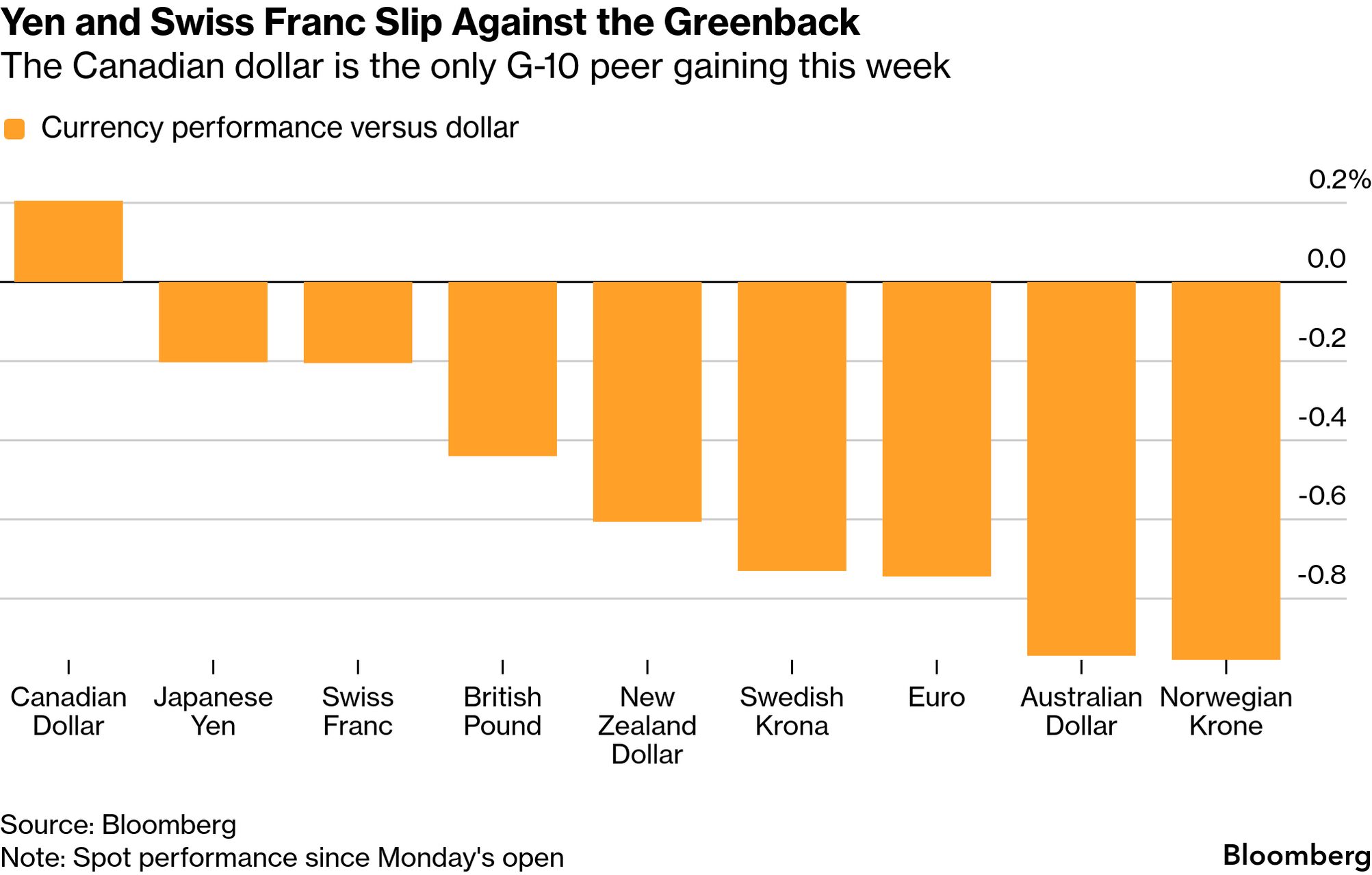
Traditional safe havens — Treasuries, the yen, the Swiss franc, and gold — have offered investors no refuge this week.
The dollar, whose haven status has been increasingly called into question, is among the few major assets . The moves show how quickly market dynamics can turn upside down, with assets once viewed as dependable shelters suddenly losing their appeal given changing expectations around central bank policy and economic growth, plus the whims of traders.
“Risk-off is not what it used to be,” Christoph Rieger , Head of Rates & Credit Research at Commerzbank AG, said. “‘Safe Assets’ don’t work as a hedge in a crisis where all policy options call for more supply and against lower rates. Some market moves make sense, others don’t.”
Here’s a closer look at why the usual shelters failed this past week:
Treasuries
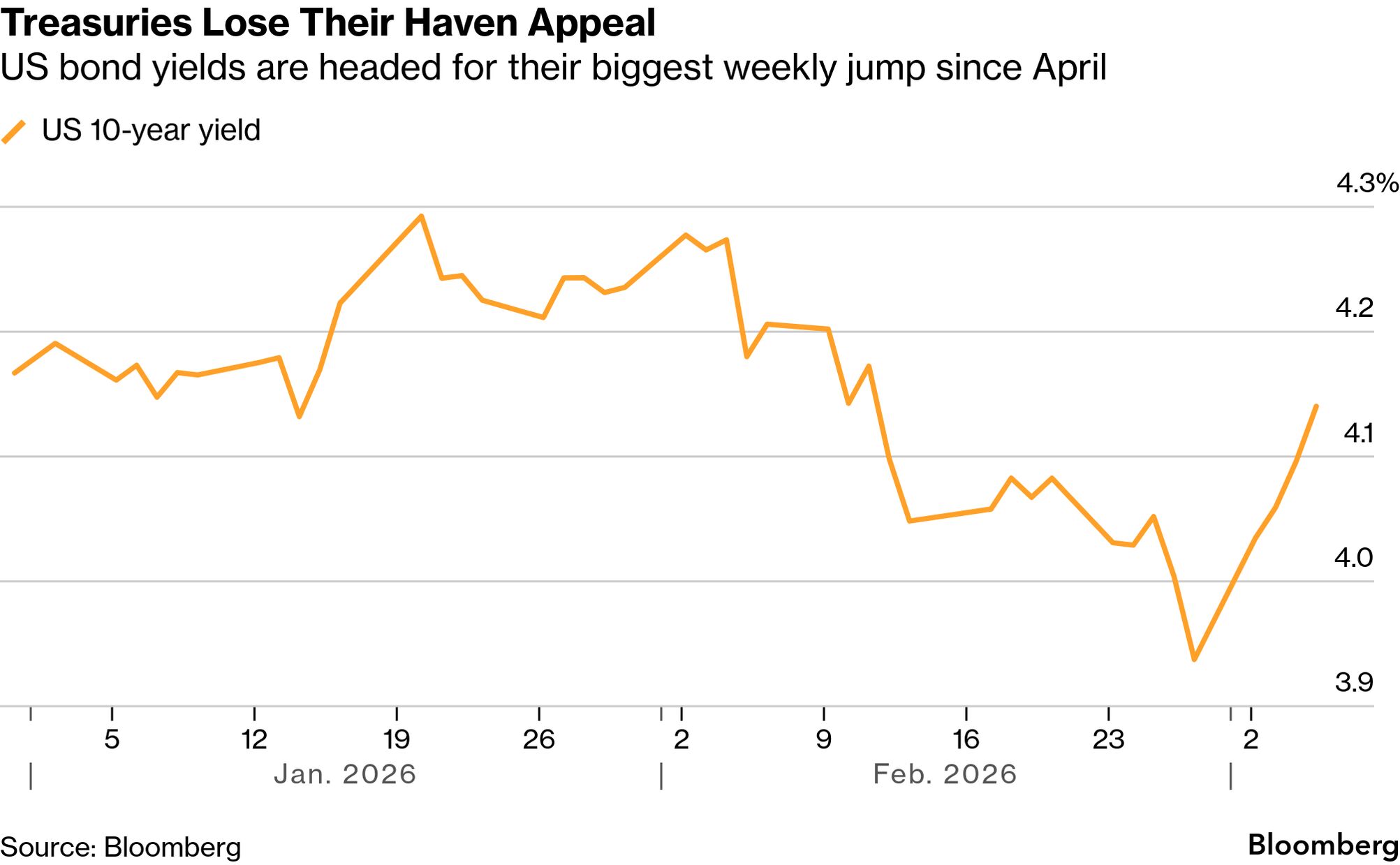
US government debt is supposed to be the world’s safest asset in times of turmoil. But inflationary threats from soaring oil and gas prices usurped that demand.
Yields on 10-year bonds have jumped 20 basis points this week, heading for their biggest jump since April’s tariff drama. It’s a dramatic from last month when they notched their sharpest drop in a year.
The inflation threat means traders also expect fewer interest rate cuts. Swaps now price between one and two quarter-point reductions compared to as many as three a week ago.
Gold
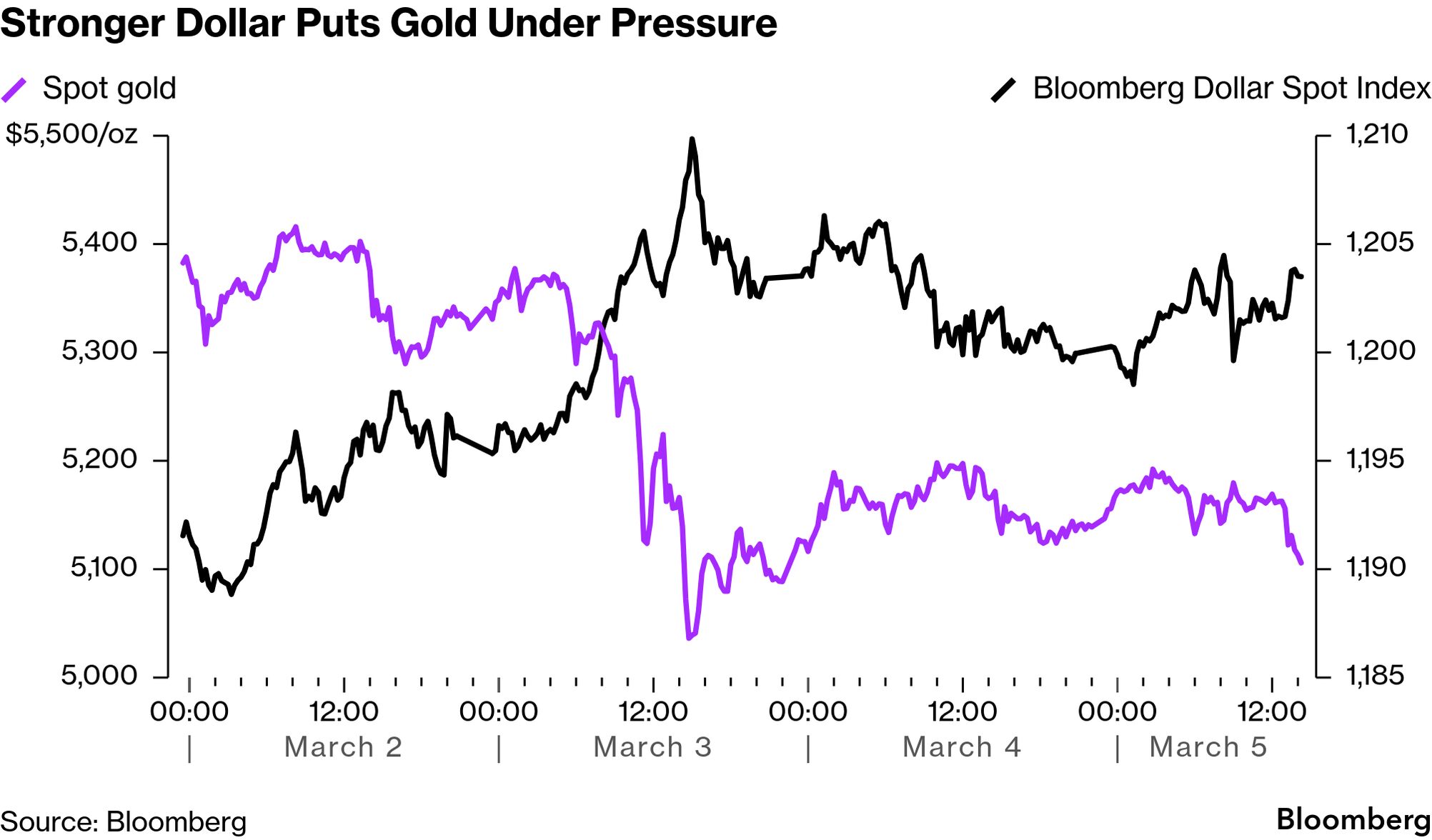
Gold hasn’t fared well.
Bullion has fallen 3.5% this week, weighed down by a stronger dollar and expectations of higher interest rates. The metal, which pays no interest, usually becomes more attractive when rates are low.
A similar dynamic played out following Russia’s invasion of Ukraine. Energy prices surged, along with interest rate expectations and the greenback — and gold consequently weakened in the months following. That period has become the for some traders.
The metal’s about 54% rally since mid-August has also turned it into a speculative hotbed, with exceptional volatility.
Yen
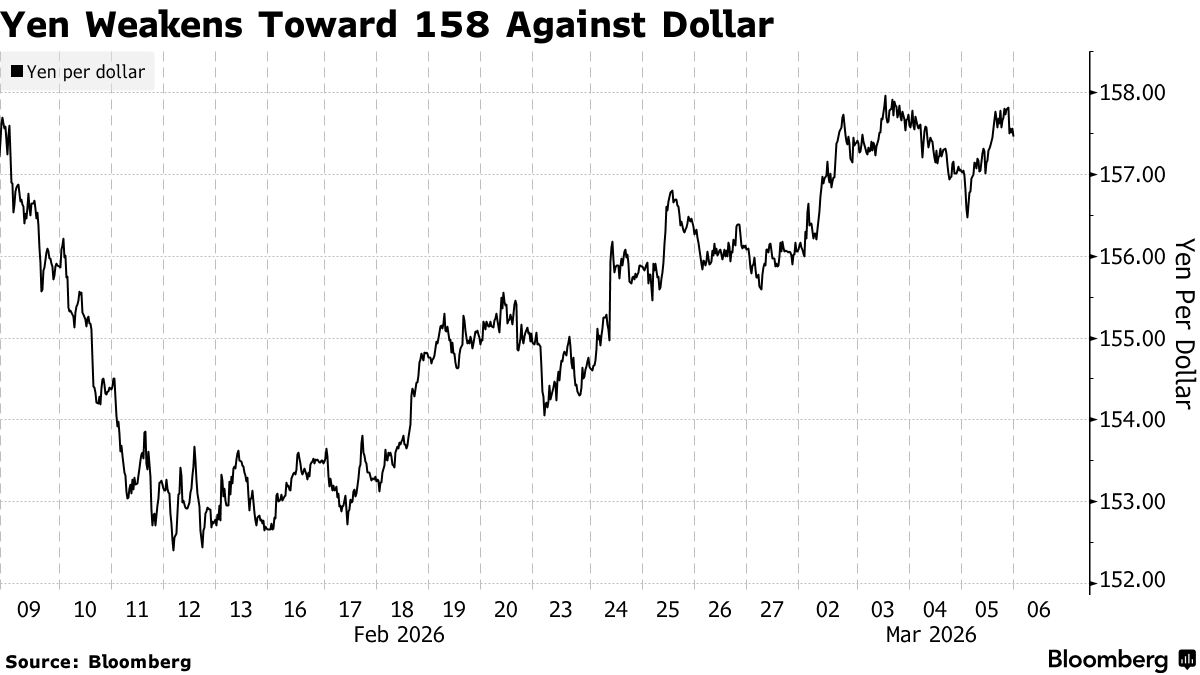
Again, it’s all about energy. Japan relies on the Middle East for more than 90% of its crude imports, with much of that coming through the Strait of Hormuz, which the war has effectively shut.
In addition, Japanese unions are demanding higher wages and inflation is starting to pick up.
It’s a recipe for stagflation — rather than the kind of demand-driven price growth that might support aggressive tightening by the Bank of Japan — and explains why the yen is down about 1% versus the dollar for the week.
Japanese Finance Minister Satsuki Katayama reiterated on Wednesday that the government could act to quell excessive currency moves, including through market intervention.
Swiss Franc
Switzerland’s low debt, sober policies and political neutrality have made the franc the safe-haven currency of choice over the past year. But its particular vulnerability in the currency crisis lies in policymakers’ apparent eagerness to choke off excessive gains using interventions.
Swiss National Bank Vice-President Antoine Martin has said the central bank to intervene to curb franc strength amid the turmoil in the Middle East, with the result that the currency is down 1.5% in the week against the dollar. His concern is that the haven flows will drive the franc higher and put a damper on inflation that’s been stuck near zero.
At the same time, currency strategists at Barclays recommended investors buy the Swiss franc versus the Japanese yen. While both currencies face energy risks, the franc is relatively better-positioned, they said. Options flows versus the dollar are also pointing to resilience , DTCC data show.