‘Lose $1 Million in 2 Seconds’: Market Chaos Rocks Trading Desks
It was 1 a.m. in London when the markets jarred Michael Brown awake. He had his phone next to his bed, and it had started pinging him with alerts, just “buzzing and buzzing and buzzing”: Brent crude is over $100 a barrel; over $110; Nasdaq futures sink 2%; the Nikkei plunges 5%.
So Brown, a senior strategist at the brokerage Pepperstone, jumped out of bed, fired up his computer and started answering the flood of calls he was getting from jittery clients in Asia. “A bit of panic was starting to set in,” he says.
This was Monday, day 10 of the Iran War, and investors were suddenly comprehending the magnitude of the disruption to Middle East oil production. Their freakout early that morning — they briefly bid up crude more than 30% — also woke up Gerald Gan , the chief investment officer at Reed Capital Partners, at his home in Singapore. Some of Reed’s clients were already nursing big stock losses, and the firm’s advisers, desperate for guidance, called Gan again and again to rouse him in the pre-dawn darkness. “We need to protect portfolios,” they implored him.
Over in the US oil patch, Dennis Kissler , a veteran commodities trader, was dealing with a very different problem. Many of his clients at BOK Financial Securities are executives at shale producers, and as they watched oil soar in overnight trading, they grew increasingly anxious to lock in those higher prices. From the moment he walked into his Oklahoma City office at 6 a.m. on Monday, the orders poured in, one after another, until Kissler found himself juggling three phone lines at once. By noon, he had shouted himself hoarse.
The market gyrations unleashed by the war over the past two weeks — a in Korean stocks; a two-day, 68% surge in European natural gas futures; record lows in the Indian rupee and Egyptian pound — have put investors on edge across the globe. have been made, and , stinging even some of the : Pacific Investment Management Co., Citadel, ExodusPoint Capital Management.
“There’s always somebody that gets hurt,” says Kissler. At moments like this, he goes on, “if you’re not paying attention, you do something backward, you can lose a million dollars in two seconds.”
It’s not just the velocity of the moves that’s stunned traders. It’s the whiplash. Markets have convulsed over a single headline, even when erroneous, like when US Energy Secretary Chris Wright Tuesday that the navy escorted an oil tanker through the Strait of Hormuz.
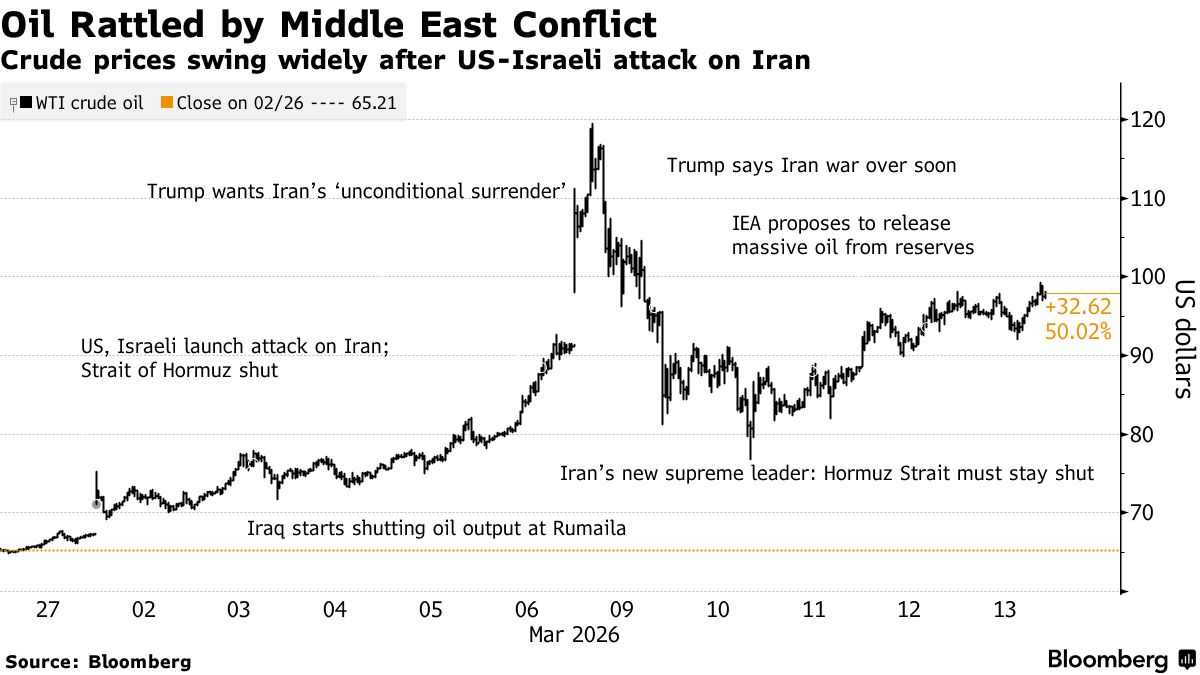
On Monday, WTI crude erased almost all of its 31% early-morning surge — the biggest intraday reversal in at least four decades — after President Donald Trump signaled that afternoon the war may be nearing an end. The S&P 500 soared in the last hour of trading, negating a 1.5% decline to post its biggest gain in a month.
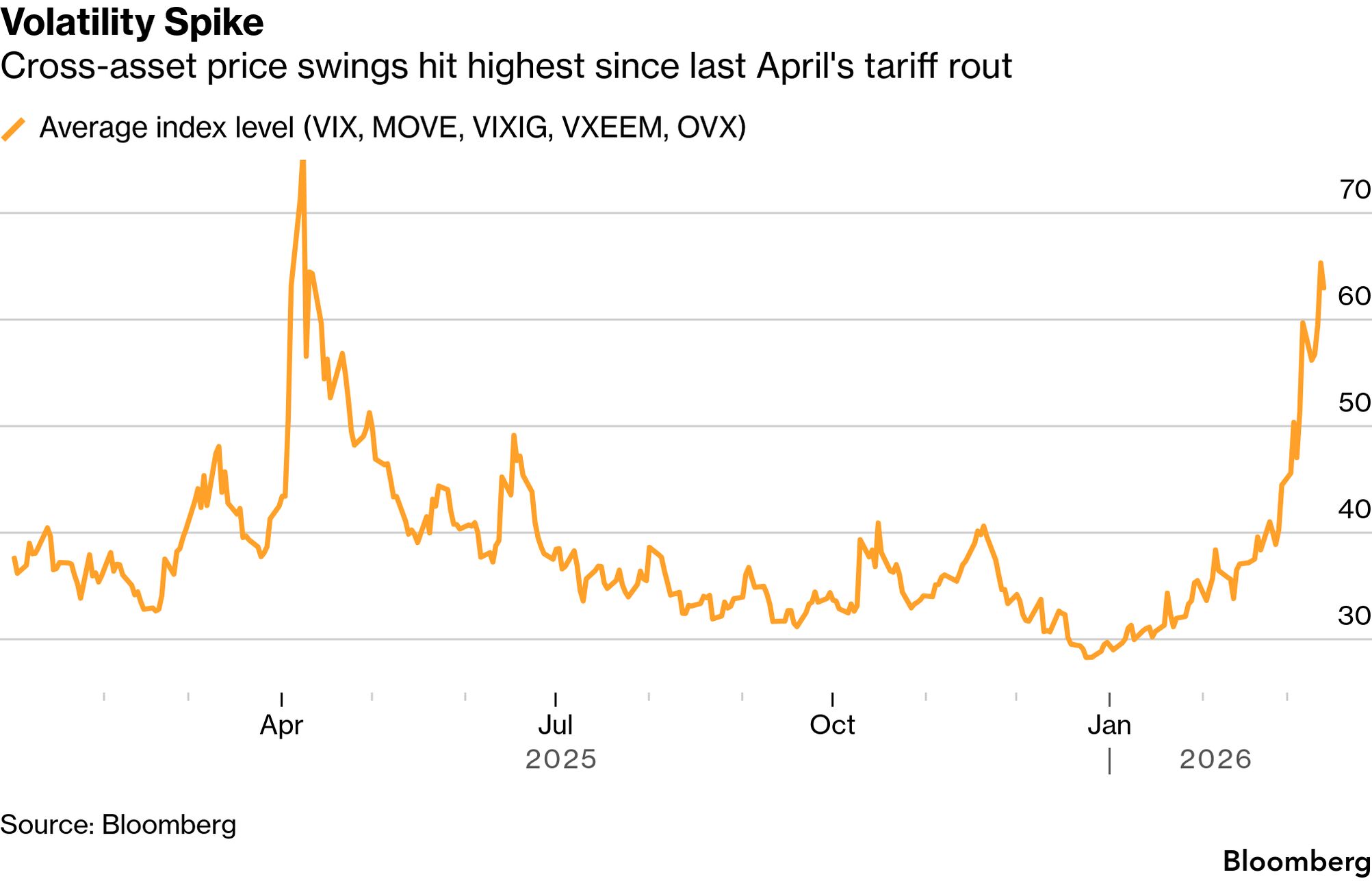
Things have calmed down some the past few days and yet, unlike the short-lived crash sparked a year ago by Trump’s tariff rollout, many in the market expect the outsized swings to last for weeks, if not months, more. A real war, they note, is just more unpredictable, and harder to de-escalate, than a trade war. “I told all my stakeholders,” says Gan, “just be careful.”
Read More:
One of the more confounding features of this selloff is that even traditional havens — with the exception of the dollar — haven’t provided protection. From gold to the yen and Swiss franc to US government bonds, assets typically sought for safety in times of crisis as soaring energy prices reignite inflation fears and drive up interest rates.
Raymond Lee , the CIO at Torica Capital in Sydney, was one of those investors who had been counting on US bonds to offset the risk in his portfolio. When he saw oil skyrocket early Monday and Treasuries, once again, sell off in response, he pulled the plug and ordered his traders to unload the two-year bond futures contracts they held.
The Treasuries market , he concluded, had become little more than an extension of the oil market, with yields rising and falling with crude prices, and he wanted no part of it until things settled back down. “Trading rates was like trading oil,” Lee said, and “I’m not an oil expert.”
Kissler is.
The head of energy trading at BOK, he cut his teeth decades ago on the floor of the Chicago Mercantile Exchange. He was there for the oil price spikes triggered by the Gulf War in 1990 and the Iraq War a decade later and remembers marveling at the shockwaves that rippled through the market.
Kissler traded through all the other oil shocks over the years: the 2008 financial crisis; the pandemic; the Ukraine war. None of them, he says, generated the kind of non-stop order flow from clients like he saw on .
Oil had jumped in the first week after the US and Israel began bombing Iran — about 30% in all — but when reports this past weekend provided a fuller picture of the decline in the region’s crude and natural gas output, investor angst mounted rapidly in the hours before trading began Monday.
Read More:
With the Strait of Hormuz, the narrow corridor that carries roughly a fifth of the world’s supply, all but closed, the International Energy Agency estimates that some 8 million barrels of oil will be removed from the market each day this month. On Thursday, the agency called it the “the largest ” to ever hit the market.
Kissler reminds his traders that it’s imperative they keep the desk properly staffed at all times right now. One trick of his at moments like this: cut down on the coffee and water, and you’ll cut down on trips to the bathroom. “You never take your eyes off the screen.”
Back in Singapore, Gan is following a similar script at Reed Capital. Online by 6 a.m., he stays glued to his screens until around 2 a.m. the next day.
Many of the biggest market declines triggered by the war have come in Asia, a region that heavily relies on oil and gas imports from the Middle East to power its factories and homes.
Each spike in crude prices quickly drives up expectations for inflation while dragging down growth prospects, squeezing countries’ finances and amplifying the pressure on markets.
Like in India, the currencies in Indonesia and the Philippines have sunk to record lows. And 5 of the 10 worst stock-market routs in the world this month have come in Asia. Almost none has been bigger than the plunge in South Korea’s Kospi index. It sank more than 7% on March 3 and then a the next day before recouping — in a string of wildly volatile sessions — some of those losses.
The Kospi rout took a bite out of Gan’s portfolio — it was a “bad hit” — though he said he managed to pocket a big score for his clients by loading up on oil a few weeks ago at around $60 a barrel.
It’s been a “roller coaster,” Gan says. He’s braced for weeks more of it. “This is not over here.”
Brown, the Pepperstone strategist in London, fears the same. “One minute you think, ‘maybe we’re out of the woods, maybe we’re getting somewhere,’” he says. “And then the next, the news flow completely turns on its head and all of your positions are under water. You’re back to square one again.”