Indian Rupee Hedging Costs Rise as Importers Brace for More Pain
The Indian rupee’s slide to record lows on the back of soaring crude prices has sent local importers rushing for cover, driving up the cost of protecting against a further drop in the currency.
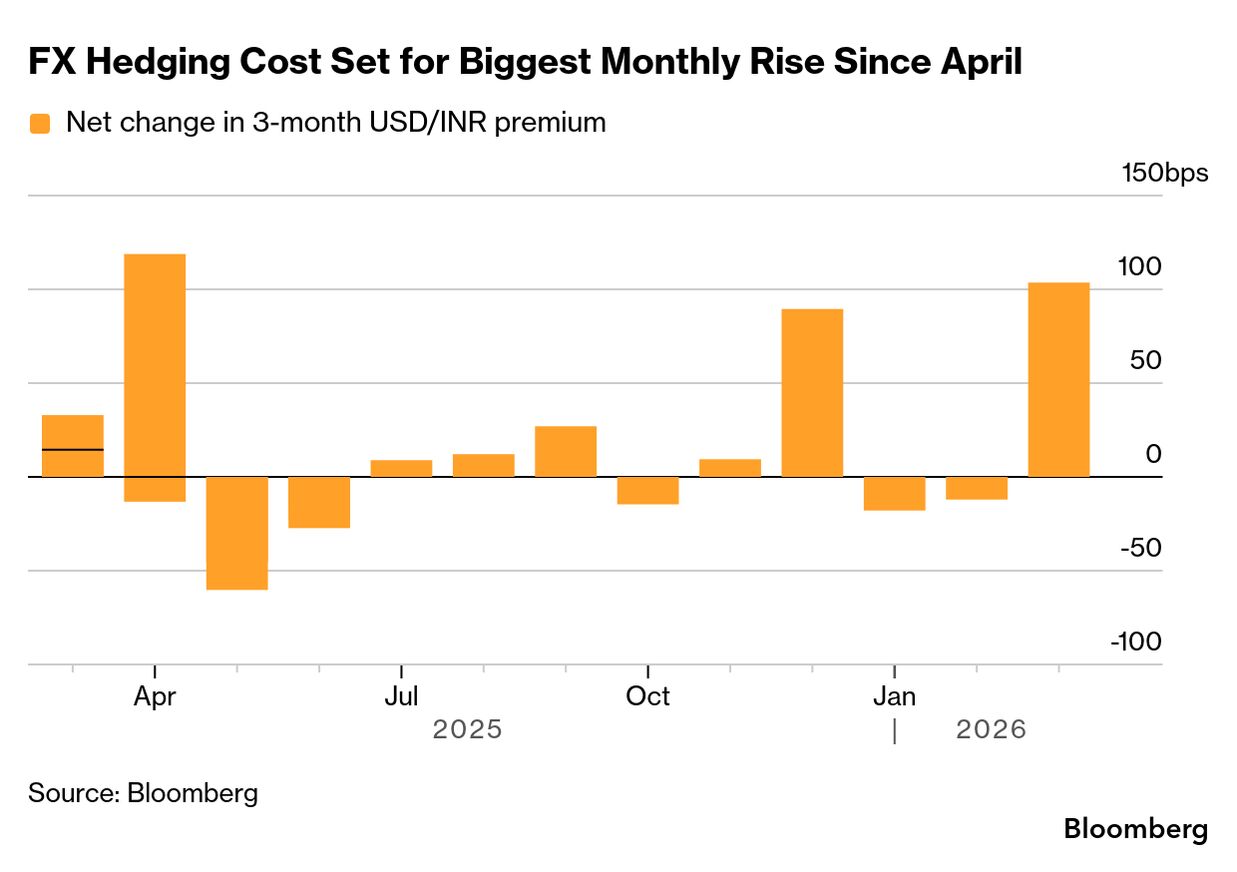
The cost of guarding against additional losses over three months rose by seven basis points on Thursday, taking the total increase this month to over one percentage point, according to data compiled by Bloomberg. The gain is on track for the sharpest monthly rise since President Donald Trump’s ‘Liberation Day’ tariffs in April.
Importers are bracing for the possibility of the Middle East crisis to drag on, and for the rupee to weaken to 94 per dollar “very fast” if the currency breaches the 92.40 level, according to Sajal Gupta , head of forex and commodities at Nuvama Institutional.
“Indian importers are typically underhedged until there is major panic, and now everybody is under pressure to hedge,” he said.
The rupee fell to a record low of 92.3638 per dollar on Thursday on concerns that a surge in oil prices would add to the country’s rising import bill.
While importers have been hedging, exporters have refrained from selling dollars forward amid expectations of further rupee weakness, adding to upward pressure on hedging costs, said Anil Kumar Bhansali , head of treasury at Finrex Treasury Advisors.
The earnings season for the quarter ended December saw companies including soap makers, airlines and oil refiners highlighting the impact of currency fluctuations.
Rising costs of currency hedging and weaker returns after adjusting for these may temper near-term foreign appetite for Indian assets, Morgan Stanley analysts including Nimish Prabhune wrote in a note.