Wall Street Banks Push Back Calls for China Rate Cuts During War
Some of the biggest US banks raised their projections for China’s inflation this year and pushed back predictions for its next interest-rate cut, as the escalating conflict in Iran sends oil prices higher.
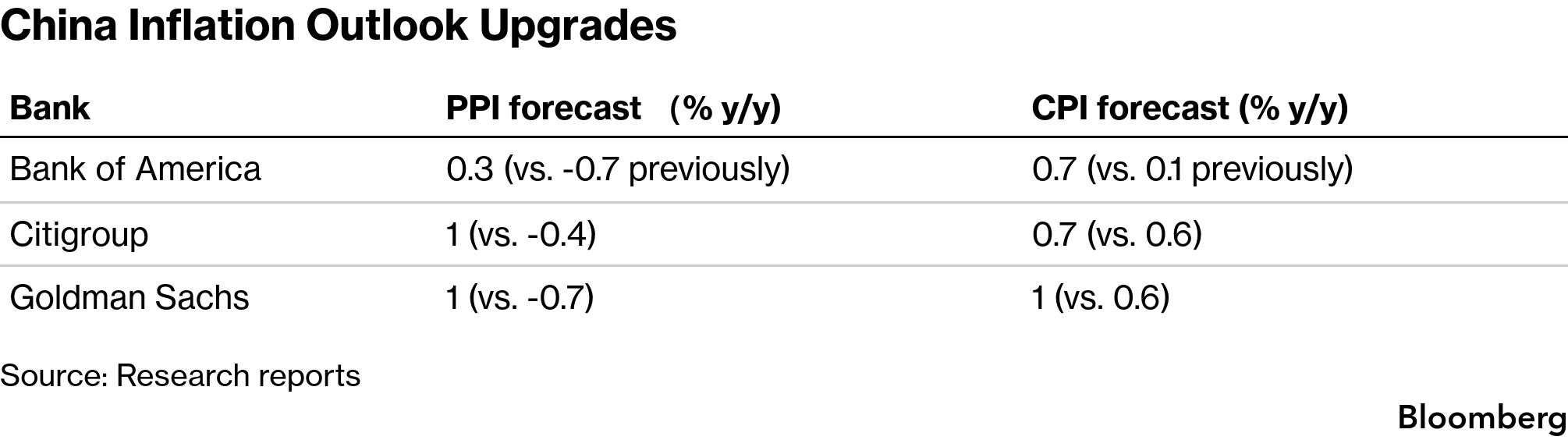
Bank of America Corp. joined other Wall Street giants like Citigroup Inc. and Goldman Sachs Group Inc. in expecting a faster increase in consumer and this year than predicted previously, according to a report published Monday.
The spike in energy costs is also making the odds of monetary easing much lower in the months ahead, with economists at BofA removing their call for two rate decreases totaling 20 basis points this year. Citi, which earlier expected cuts to resume next quarter, now predicts the People’s Bank of China will deliver a single 10-basis-point reduction in the second half of the year.
“We see policy moving toward a wait‑and‑see stance,” BofA’s economists said in the report. There’s “less need to ease immediately, but greater capacity to respond quickly and decisively if external or domestic demand weakens unexpectedly or financial conditions tighten.”
The emerging consensus among economists mirrors expectations in the market , as traders pare back bets for further monetary easing. The yield on China’s 30-year government bond rose to an 18-month high last week.
Investors, economists and policymakers worldwide are fast to the new reality of more expensive energy, as attacks in the Gulf send oil costs soaring and threaten to disrupt supply routes more broadly.
Officials at the US Federal Reserve kept borrowing costs on hold last week while acknowledging added uncertainty created by the war in the Middle East. The Bank of England said on Thursday it “stands ready” to act to prevent inflation from accelerating.
Traders have also started to boost bets on rate hikes by central banks from the to Australia .
In China, the central bank has increasingly been on the sidelines when it comes to managing an economy hampered by weak demand and deep-seated imbalances, with fiscal stimulus expected to do most of the heavy lifting. The PBOC delivered just one 10-basis-point reduction to the policy rate in 2025 — far less than many had expected.
Even before the hostilities in the Middle East, policymakers have been a cautious approach to monetary easing. China’s top leadership this month set its most modest growth target for the economy since 1991.
But the possible timing of future rate cuts is now even less certain.
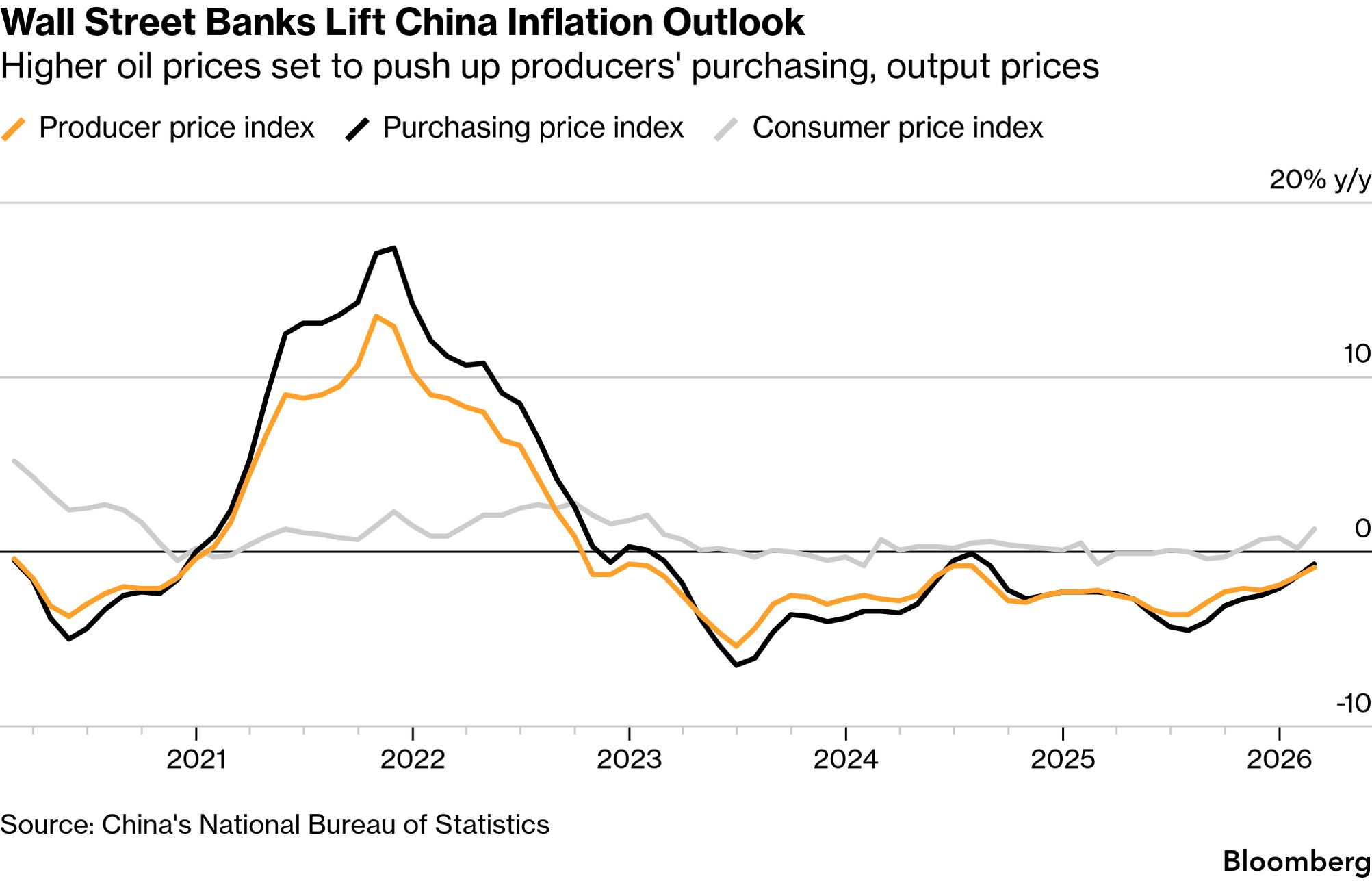
Adding to higher oil prices, a global rally in metals supported by investments linked to artificial intelligence — as well as a modest in consumer and business demand at home — are among factors cited by economists who see a bigger rebound in prices ahead. China will likely exit a record streak of economy-wide deflation as soon as this month, as soaring oil costs push up expenses for the industrial sector.
But in the absence of stronger demand, factories may find it difficult to pass on the higher costs to buyers and end up with even thinner profits. It’s a worry given official data shows the share of loss-making industrial companies in China climbed to 24% in 2025, the highest this century.
The upward changes by Goldman, Citi and BofA for were smaller in comparison with their revisions for producer prices, as economists predict higher costs won’t easily reach the retail and services sectors. A 1% increase in the producer-price index translates into only around 5 basis points of core consumer inflation, according to economists at Goldman Sachs.
“Historical experience suggests that energy-driven PPI reflation is highly concentrated in upstream industrial sectors,” they wrote in a report Monday.