Invesco’s Top Fund Manager Sticks to Bearish Dollar Call Despite Surge
A top fund manager at sees the dollar’s rally since the start of the Iran War as nothing more than a fleeting boost for a currency she argues is overvalued.
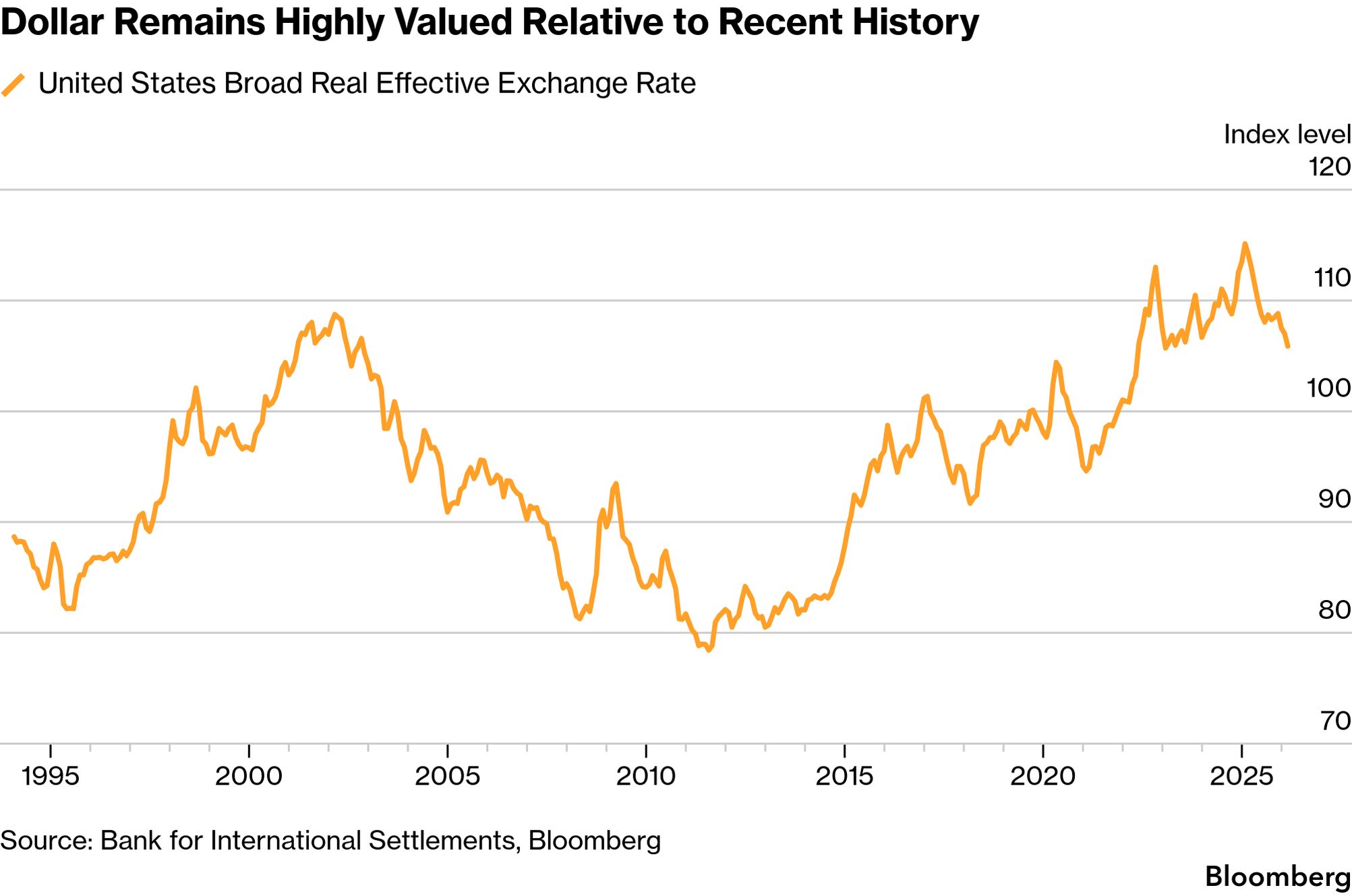
Kristina Campmany , a senior portfolio manager at the $2.3 trillion asset manager, says the dollar is still expensive when compared to major peers like the Japanese yen, Australian dollar and Chinese yuan, even after falling some 5% since President Donald Trump put tariffs on global trading partners in April. That loss was even bigger before the war, with the greenback climbing 2% since Feb. 27.
“There’s no other market with the depth and capacity of the US, but the dollar is already starting from an overvalued position,” Campmany said in an interview.
That’s a view embraced by some Republican and Democratic policymakers in Washington. They say nations like China artificially depressed their currencies to boost trade as globalization proliferated in the past few decades, encouraging Americans to buy cheap foreign goods. Last month, US Commerce Secretary Howard Lutnick said the dollar, over many years, “has been manipulated higher in order to keep the US economy from exporting to the rest of the world.”
But with signs of globalization , a “broader shift toward a more multipolar world” will reduce just how much global investors are willing to pay for the greenback, according to Campmany.
“These cycles typically last seven to 10 years, and the structural drivers of dollar weakness are still in place — if anything, they may be strengthening given current geopolitical dynamics,” she said.
Still, the dollar has proven to be a top during the Middle East conflict. The effective shuttering of the Strait of Hormuz — a key channel for oil transport — has sent crude prices soaring higher. That’s supported the dollar, which is closely tied to oil due to America’s status as the world’s top producer and the currency’s central role in global trade of the commodity.
Those dynamics — along with the fact that US financial markets remain the most deep and liquid in the world — have driven plenty of dollar buying this month. In just weeks, speculative traders have erased a sizable short against the greenback and are now building long positions for the first time this year.
However, Invesco and other Wall Street firms are gaming out scenarios for the US currency as the conflict progresses.
At Barclays Plc, a team including Themistoklis Fiotakis and Lefteris Farmakis argue that the mercurial nature of the White House and a shaky US technology sector may drag on the dollar in the coming months. At Goldman Sachs Group Inc., strategist Isabella Rosenberg expects escalating fears about growth to boost the yen and Swiss franc versus the greenback.
“Much of the price action since the launch of the conflict has been driven by deleveraging and derisking,” Campmany said about the recent gyrations across financial markets. “There has actually been tremendous value created in the market, and many assets look mispriced.”