Euro Poised for Worst Quarter Since 2024 as Oil Shock Bites
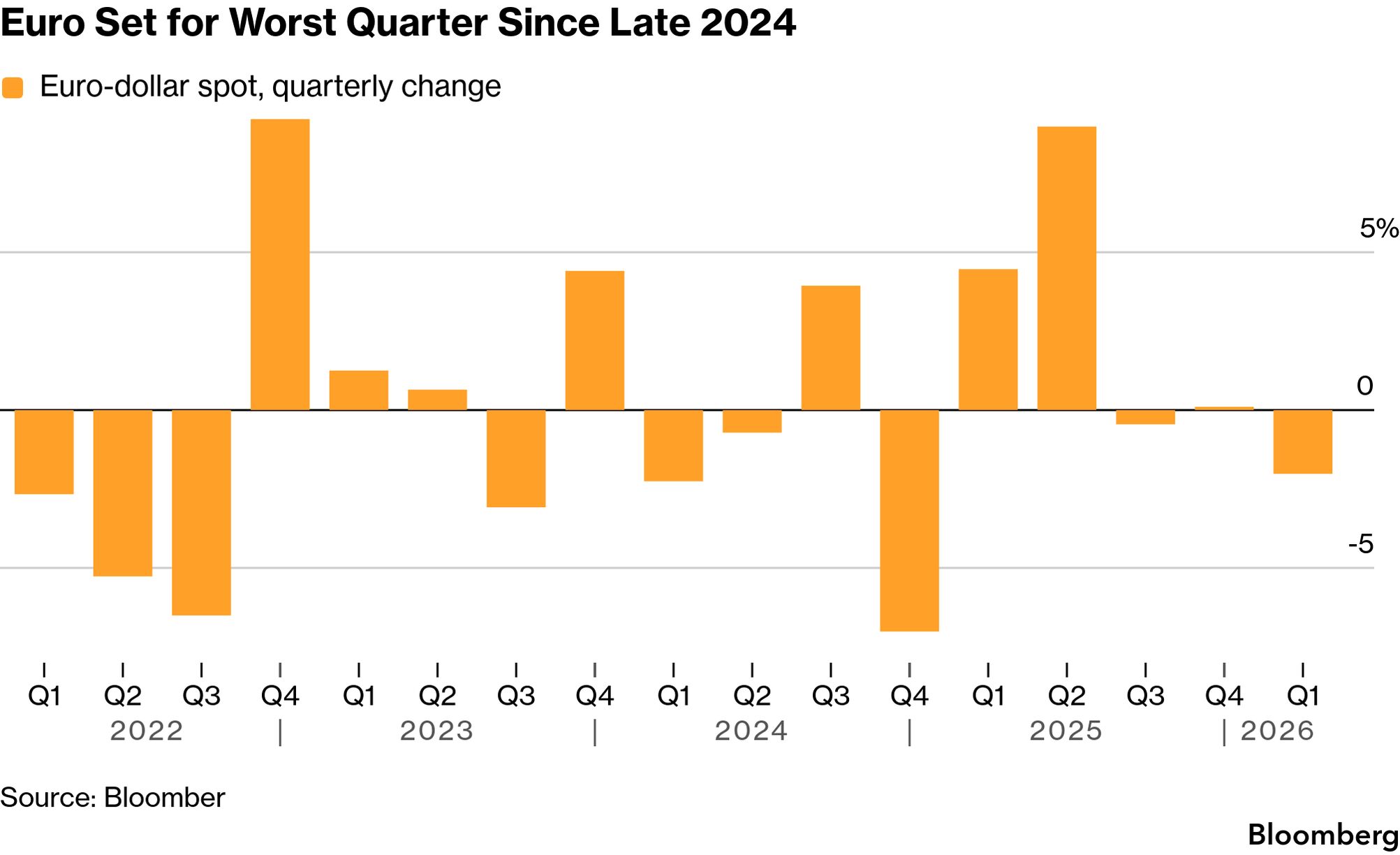
The euro is heading for its worst quarter since 2024 as war in the Middle East underscores Europe’s dependency on energy imports and rattles the region’s economic outlook.
The common currency is down about 2% this quarter at around $1.15 and has lost 2.5% against the dollar in March, the most since July. It’s a sharp reversal from late January, when it punched past $1.20 to the strongest level in nearly five years. In the short term, Morgan Stanley strategists led by David Adams see the euro falling as low as $1.13.
With oil topping $115 a barrel and Iran keeping the Strait of Hormuz largely closed, currency traders are looking to their 2022 playbook, when Russia’s invasion of Ukraine hammered European markets and boosted the dollar. While the US benefits from its status as a major oil producer, the European Central Bank is once again facing energy-driven inflation and weakening economic activity.
Money markets now price three interest-rate hikes this year, a stark shift from the 35% probability of a cut embedded just weeks ago. At the same time, optimism over Germany’s fiscal pivot and defense-spending push has faded, the OECD has cut growth forecasts, and Germany and Italy are weighing downgrades to their official projections.
While higher rates typically support a currency when the economy is strong, that’s not the case with the Middle East turmoil causing supply constraints. As Gulf nations invest less abroad amid the crisis, tighter global financial conditions will hit growth-sensitive currencies like the euro hardest, ING said
Options contracts suggest deeper damage than the year-end $1.20 forecast by analysts in a Bloomberg survey . In a matter of weeks, the market has gone from pricing a long-term bullish outlook for the euro to one of fragility.
Demand for protection against euro weakness hit a four-year extreme earlier this month. Longer-dated metrics show that traders who were consistently paying a hefty premium last year for bets on euro strength have pulled back entirely, leaving sentiment neutral.
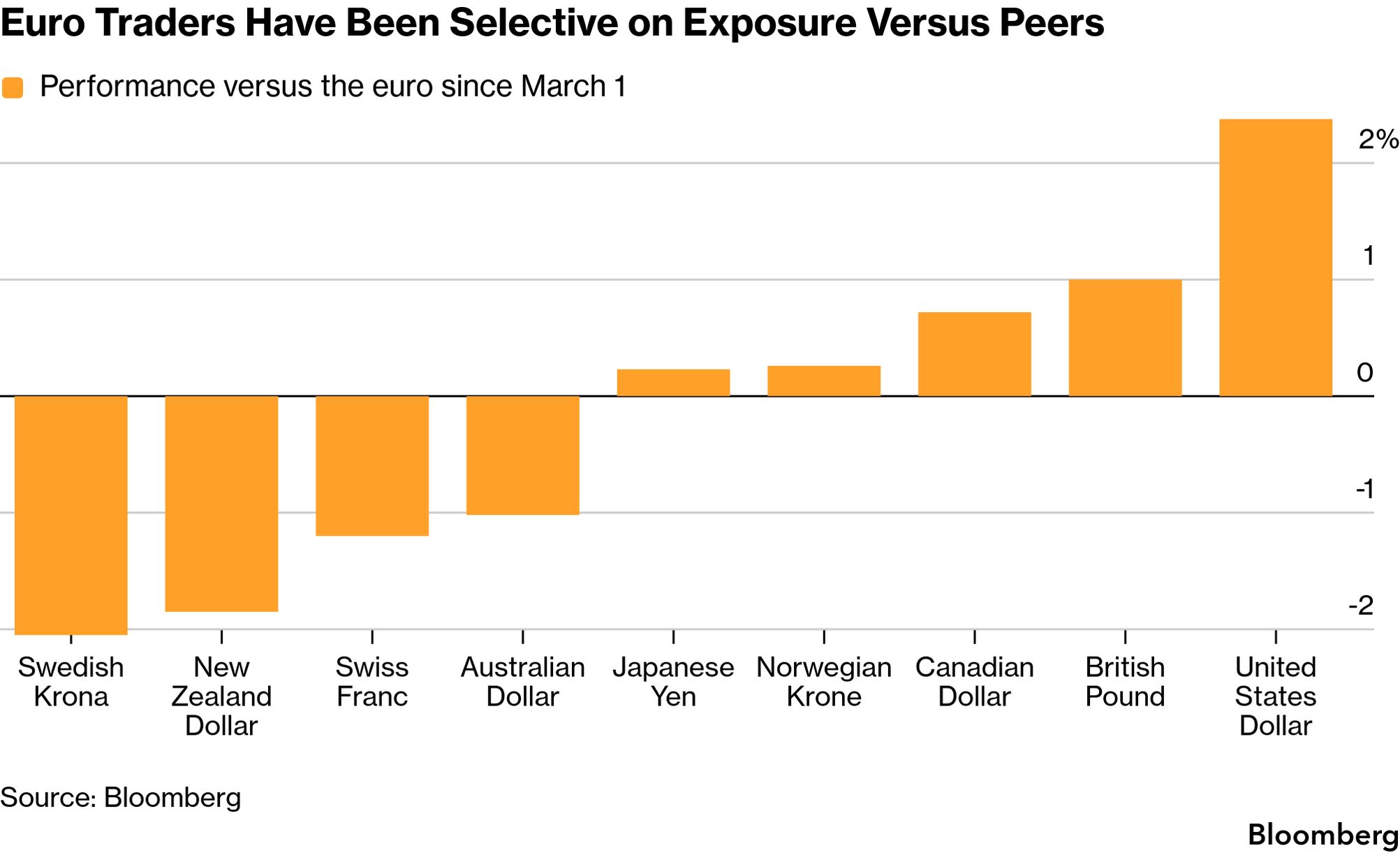
There’s persistent demand for protection against euro weakness versus havens and commodity-linked currencies: Bearish options bets on the euro dominate by nearly four-to-one against the yen. Positioning against the Swiss franc and the Australian dollar tilts the same way, though less emphatically.
Still, the picture across currency pairs isn’t universally bearish for the euro.
Traders are paying more than four times as much to bet on the common currency gaining against the UK pound as to bet on it falling, according to Depository Trust & Clearing Corporation data this month.