Sterling Is Carrying More of a War Premium Than Euro in Options
The pound looks more vulnerable than the euro in options markets, a sign that traders see the UK as more exposed to a spike in energy prices even after the
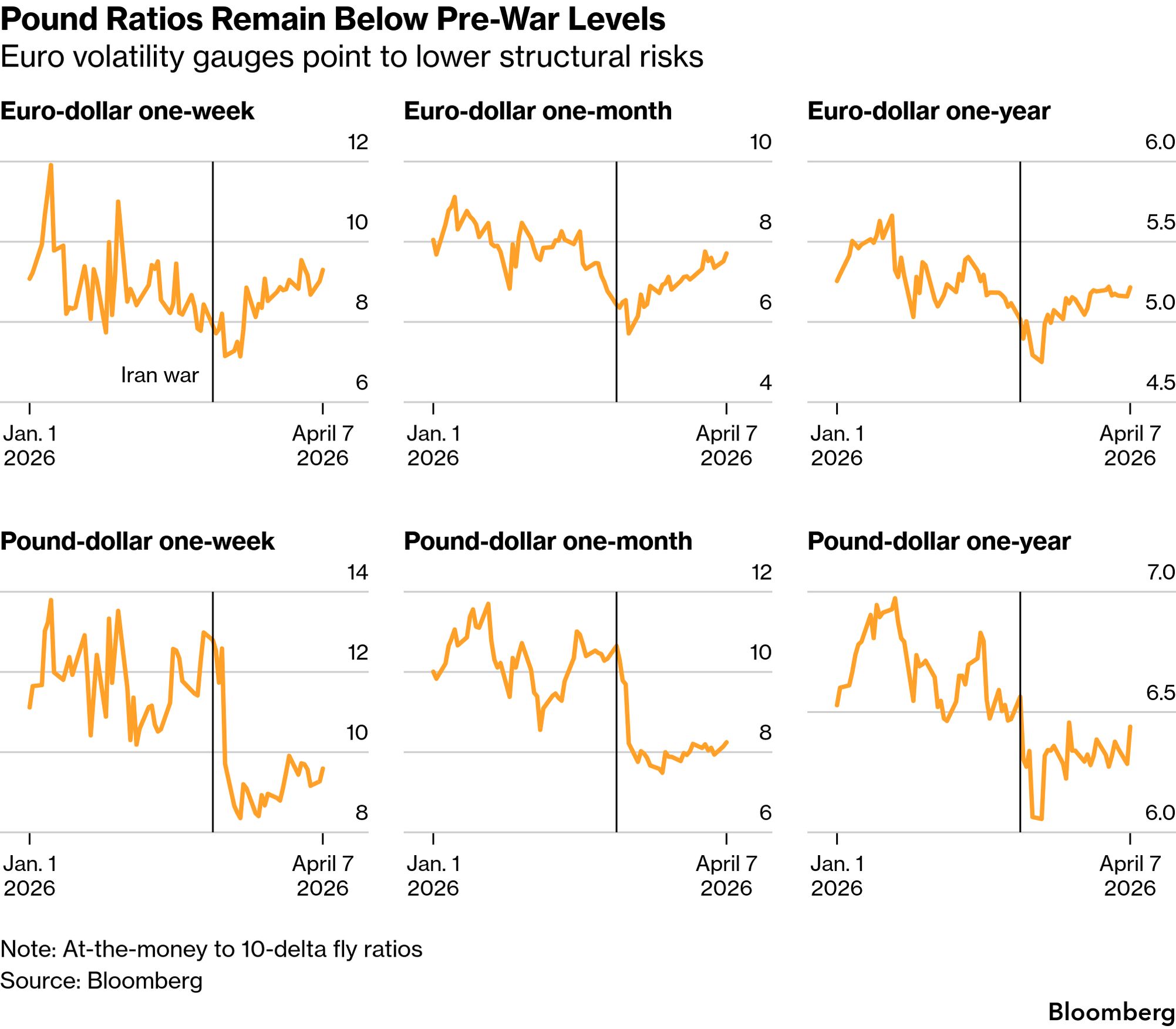
Options show that demand for protection against large moves in sterling relative to hedging short-term swings is still higher than when the war broke out in late February. That contrasts with the euro, where the same measures have largely normalized.
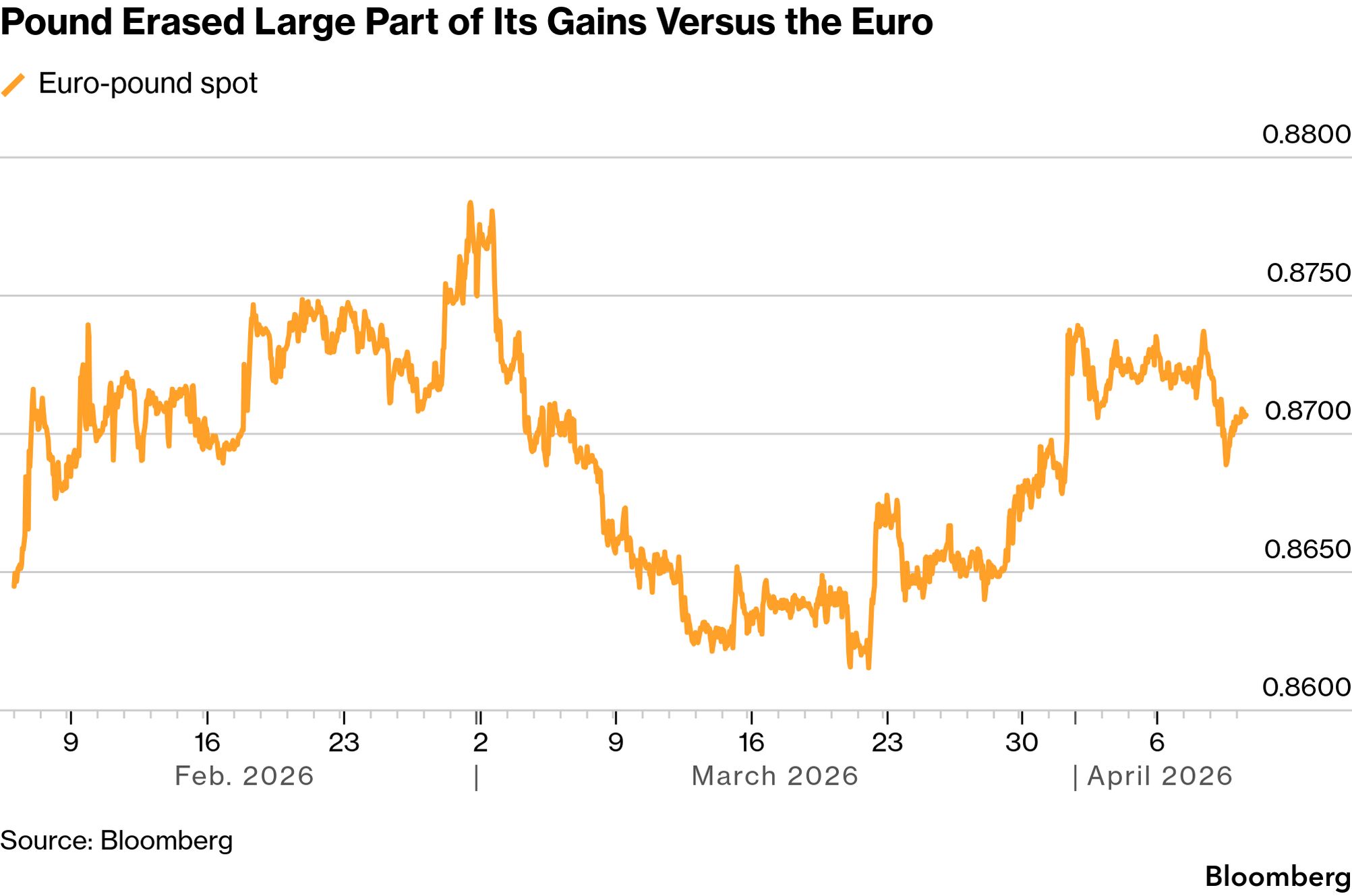
The divergence matters because it runs against the initial reaction to the conflict. Euro-pound fell roughly 1.5% in the first phase of the war, reflecting the view that the euro area would be especially vulnerable to an energy shock. Those losses have since been almost erased. In options, however, the longer-lasting distortion is now more evident in sterling.
That doesn’t mean investors see the euro area as immune to fallout from the war. Instead, they appear less willing to rule out the chance of extreme moves in the pound than in the common currency.
The outlook is consistent with the broader economic backdrop. Inflation was higher in the UK than in the euro area before the war, making traders more sensitive to the risk of energy shocks putting sustained upward pressure on prices.
An meanwhile shows the UK is among the European countries most exposed to higher energy prices, due to its reliance on gas-fired power. The IMF has also warned that an energy shock would add to the cost-of-living squeeze and lead workers to demand higher wages.
Interest rate expectations tell a similar story. For both the UK and euro area, the war has caused traders to go from from expecting interest rate cuts to betting on hikes. But the scale of the shift was much greater for the UK, given traders were anticipating at least two rate cuts this year by the Bank of England.
Taken together, the data points show fallout from the war extends beyond interest rates. Options traders are treating sterling as more exposed than the euro, even as markets scale back the most extreme war pricing.