Traders Buy Pound Protection on Policy, Election and War Risks
Investors are adopting a more cautious approach to the pound, with options traders zeroing in on three distinct risks.
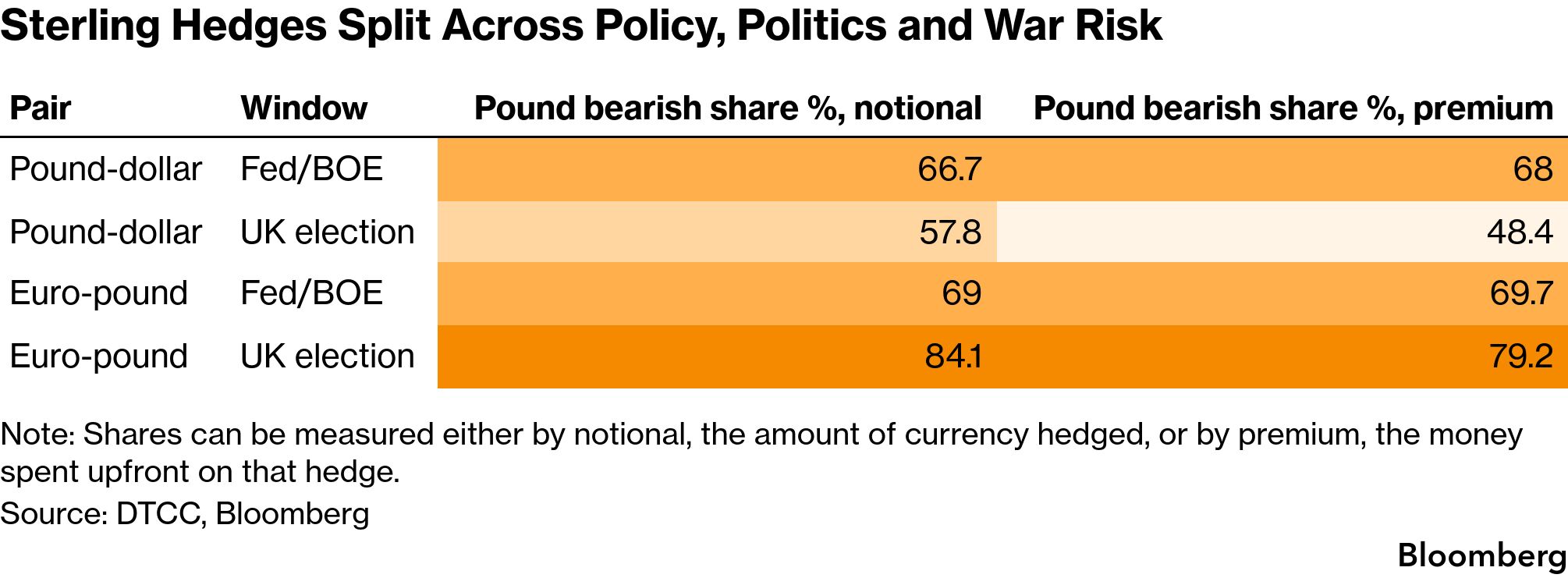
Central bank meetings this week, local UK elections on May 7 and fallout from the Middle East war are showing up in different parts of the options market. But the trend is consistent: bearish-sterling positions make up nearly 60% of options against the dollar this month and more than 70% against the euro.
Whatever the root cause, investors are paying up more often to protect against pound weakness than to position for a surge. That could herald a change in fortune for sterling, which has has gained roughly 1% against the dollar and 0.6% versus the euro since the start of the Iran war.
Policy risk is clearest in pound-dollar options as central banks wrestle with how to address . The contracts expiring on April 30 — which cover Federal Reserve and Bank of England meetings — are about a quarter bigger than those tied to the May election window. That suggests the pound-dollar currency pair is where investors are concentrating central bank risk.
By contrast, anxiety over political turbulence and whether Keir Starmer might be is primarily showing up via the euro. Options volumes around the local elections are more than double those in late April, and about four-fifths of the flow is bearish sterling.
Read more: Goldman Says Pound Highly Overvalued With Fiscal Risks Remaining
The Iran theme looks different. The largest premium concentrations, or upfront costs, in pound options flows sit beyond both the monetary policy and election dates, showing traders are using longer-dated protection for what they see as a persistent backdrop of elevated risk.
While the hedges are tied to different time horizons, the overall message is that sterling remains a currency the market would rather protect against than own. That is also reflected in so-called risk reversals, which show investors are paying a premium for bearish-pound exposure against both the dollar and the euro across the curve.