Low Dollar Volatility Forces FX Traders Into Carry, Value
A sharp drop in volatility in the US dollar is pushing traders in the $9.5-trillion-a-day currency market toward carry wagers and bets on relative value in search of profits.
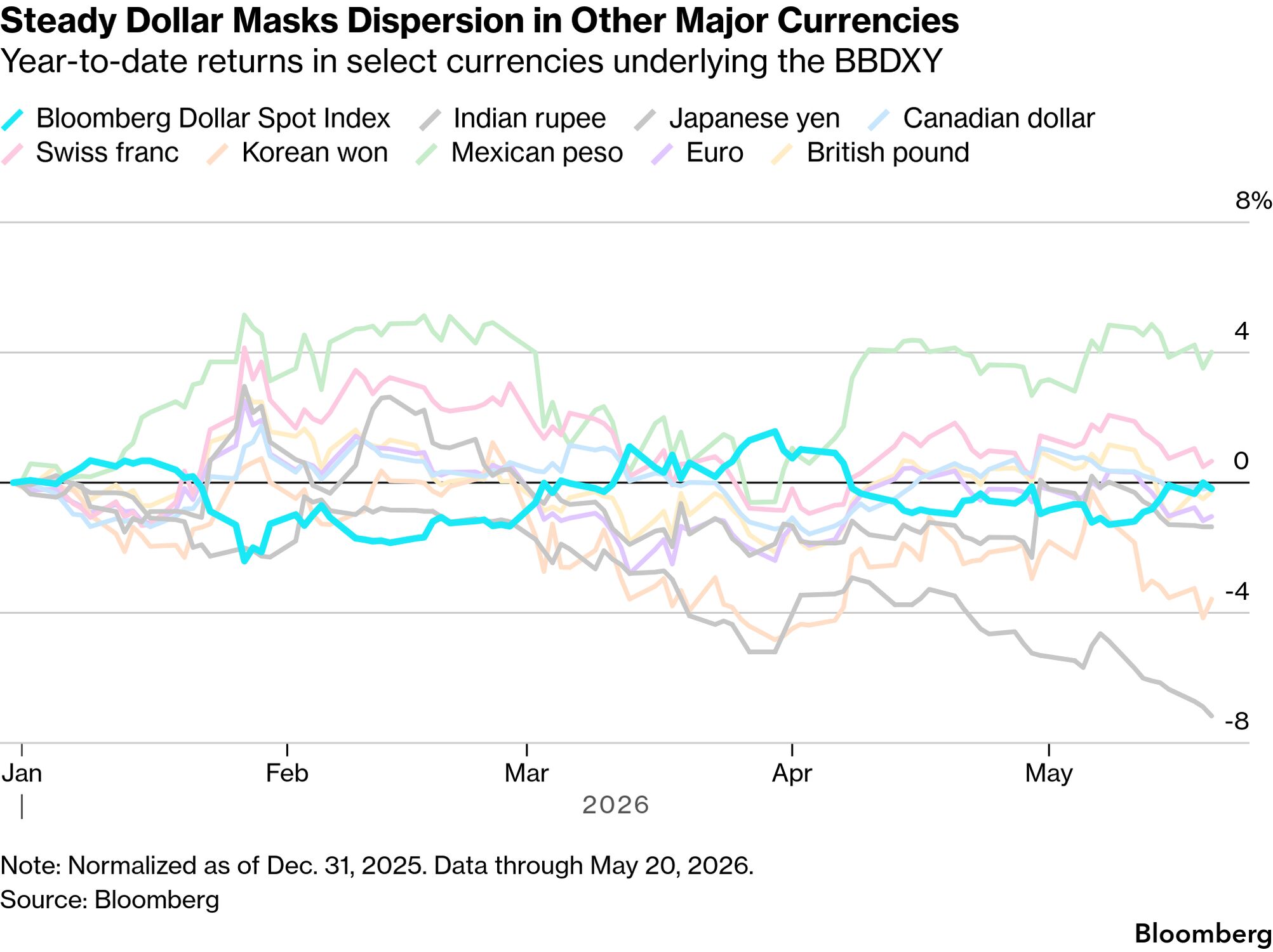
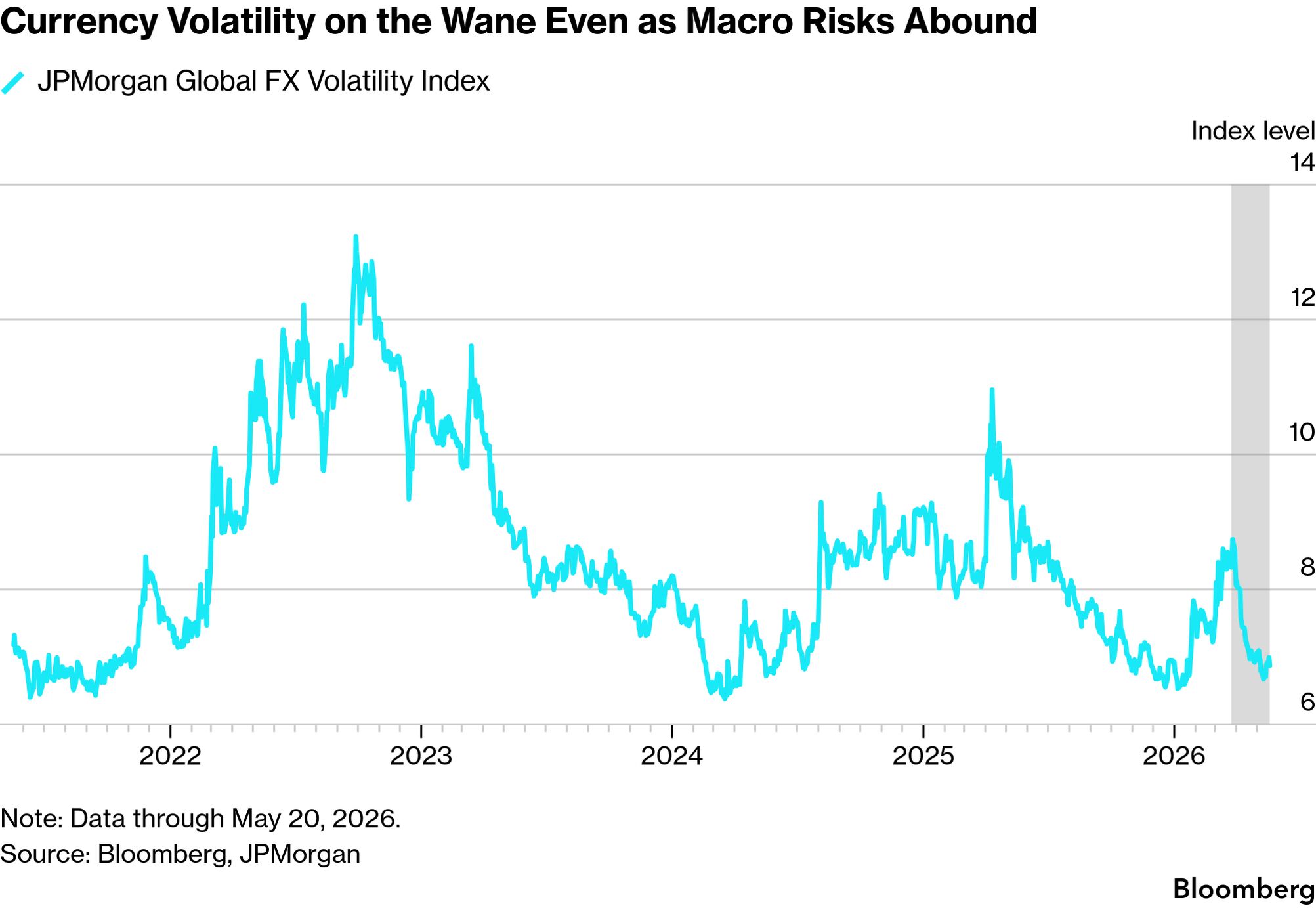
Even as the war in Iran and surging oil prices sends markets tumbling, the world’s reserve currency is trading about flat this year. One aggregated measure of currency swings, the JPMorgan Global FX Volatility Index, is near its lowest level since 2024.
That’s pushing traders to embrace bets — like carry and relative-value trades — that profit from small spreads or yield differentials, which are more likely to persist when major currencies are holding steady.
“You just have to be nimble and trade in smaller size,” said Leah Traub , a portfolio manager and head of the currency team at Lord Abbett & Co, which manages some $250 billion in assets.
The current environment is ideal for “active, relative-value currency management,” said Jörn Kleinhans, a tax and investment strategist at Scorpio Tax Management who previously worked in fixed income at Pimco and Invesco.
Relative value strategies look to capture mispricings across exchange rates and other fundamental factors on the view that they will eventually return to normal. That could involve playing two emerging-market currencies off against each other, or a pair of currencies in the same region that have similar economic profiles but different foreign-exchange valuations.
Traders looking for opportunities in the currency markets should forgo the dollar and focus on relative value across foreign-exchange crosses, a Deutsche Bank AG team of currency strategists including George Saravelos wrote in a Wednesday note .
“With the Strait of Hormuz still not crossable, our conviction that a broad-based dollar downtrend will resume this year is dropping,” said Deutsche Bank analysts, referring to a vital waterway for oil and natural gas tankers.
At Wells Fargo, Alvaro Vivanco and his team recommend traders buy the South African rand versus the Mexican peso. The rand is attractive, he said, given that it offers both exposure to higher commodity prices and a hawkish Reserve Bank relative to the Banco de México ’s more dovish stance.
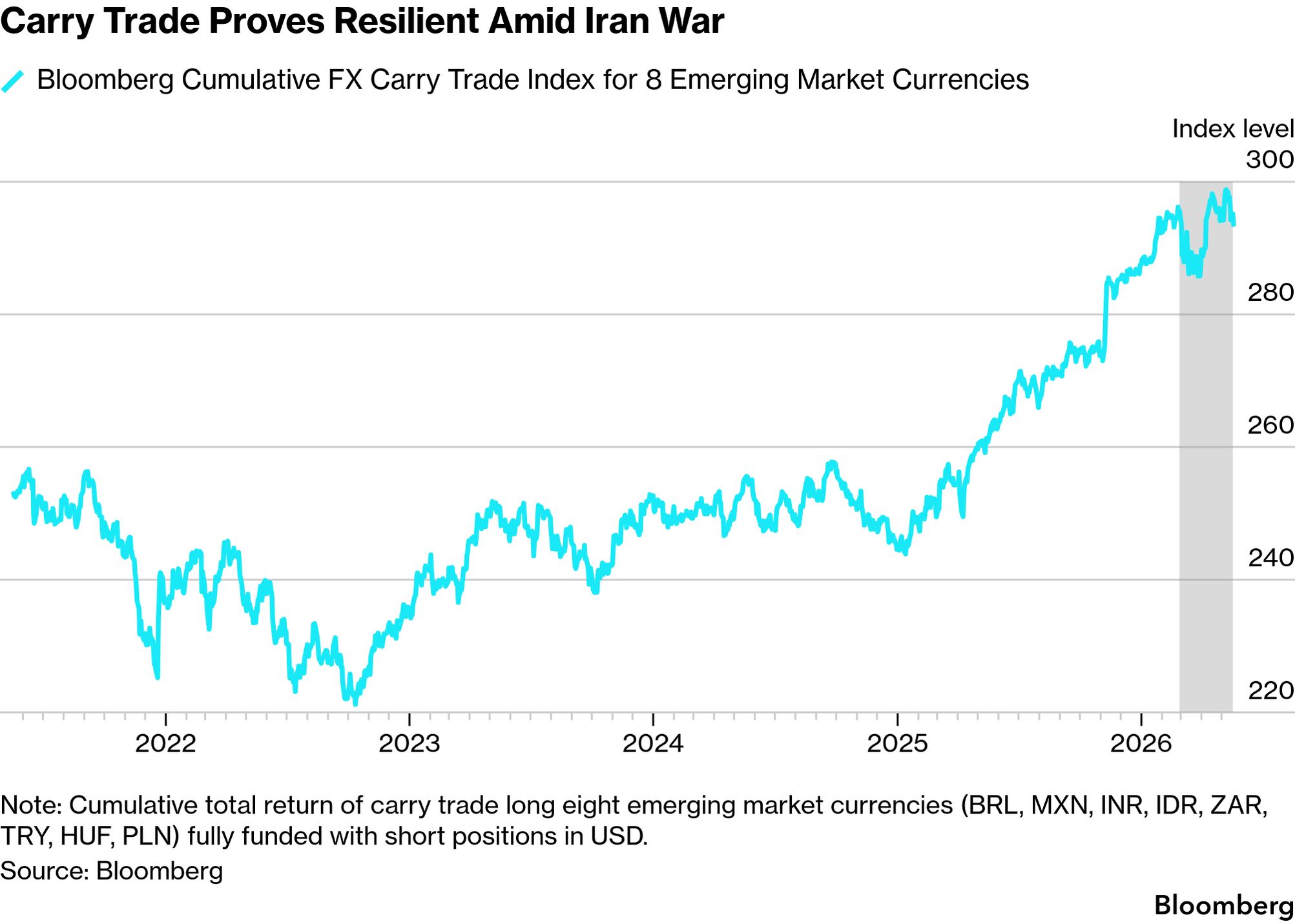
Meanwhile, long carry trades remain among JPMorgan Chase & Co. strategists’ highest-conviction currency views as global growth withstands rising energy costs.
So-called carry trades, in which investors borrow where interest rates are low and invest where they’re high, is dependent on picking up incremental returns over time. Swings in spot exchange rates can quickly wipe out any of the yield pickup.
, however, is presently subdued both for the currencies that are commonly used to fund these trades (like the yen and Swiss franc) as well as those that traders like to buy on the other side of the trade (such as the Brazilian real or the South African rand).
A Goldman Sachs team including Teresa Alves recommends traders pair longs in the real and forint alongside the Mexican peso and rand, funded by selling the euro, Swedish krona, Thai baht and even the Chilean peso.
While carry trades do well in this backdrop, Sam Lynton-Brown , head of global macro strategy at BNP Paribas, said the biggest risk to them would be if the Federal Reserve started hiking interest rates.
“Absent that, what you have is a very positive US cyclical dynamic but without dollar appreciation, that’s highly supportive for carry,” said Lynton-Brown.