US, UK Firms Boost FX Hedging as War Sparks Volatility
Companies in the US and the UK ramped up their currency hedges last quarter as the war in Iran roiled global markets, an industry survey shows.
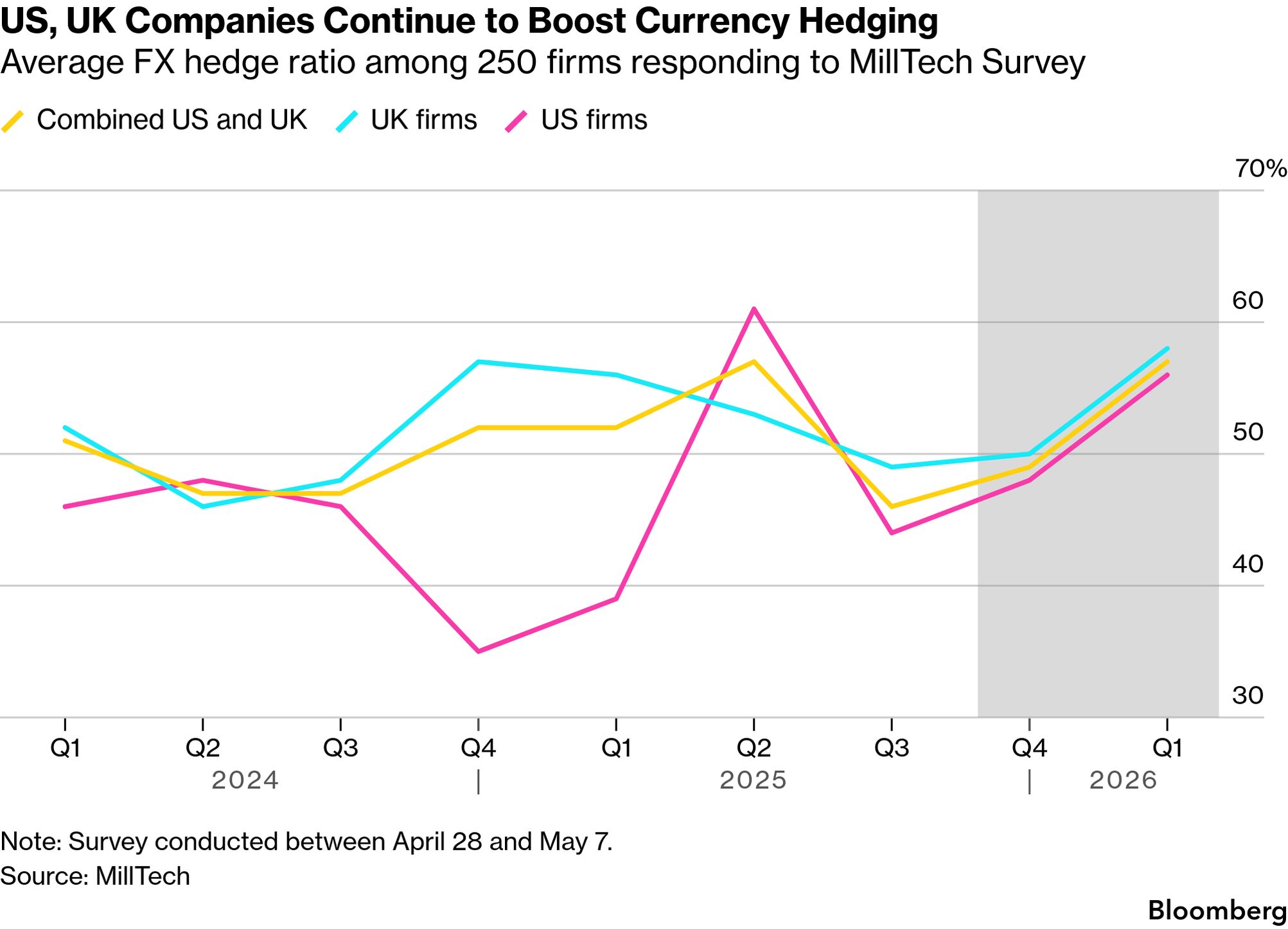
Corporate treasurers on average protected 57% of their foreign-exchange exposure using financial instruments in the first three months of the year, up from 49% in the fourth quarter, according to currency hedging and cash-management platform . It was the highest level since the firm began querying corporations in the first quarter of 2024.
International events, including the US capture of Venezuelan President Nicolas Maduro in January and the surge in energy prices as a result of the Middle East conflict helped drive the pickup in hedging, according to Eric Huttman , chief executive officer at MillTech.
The increase reflects “a more proactive approach to FX risk management as corporates respond to heightened market volatility,” Huttman wrote in a report accompanying the data.
The gained about 1% in the first quarter on the back of a rally in March as the Iran war sparked haven buying of the greenback and tempered bets on Federal Reserve policy easing.
For US multinationals, a firmer dollar weighs on the value of overseas earnings and makes their products less competitive overseas, while making imported components cheaper. For UK firms, dollar strength versus the pound would have the opposite effect, boosting the cost of imports from the US.
The JPMorgan Global FX Volatility Index spiked in late March to the highest since mid-2025, before receding in the following weeks as traders monitored developments in the ceasefire between the US and Iran and the outlook for the Fed.
MillTech surveyed 250 US and UK corporations, whose market capitalization ranges from $50 million to $1 billion.
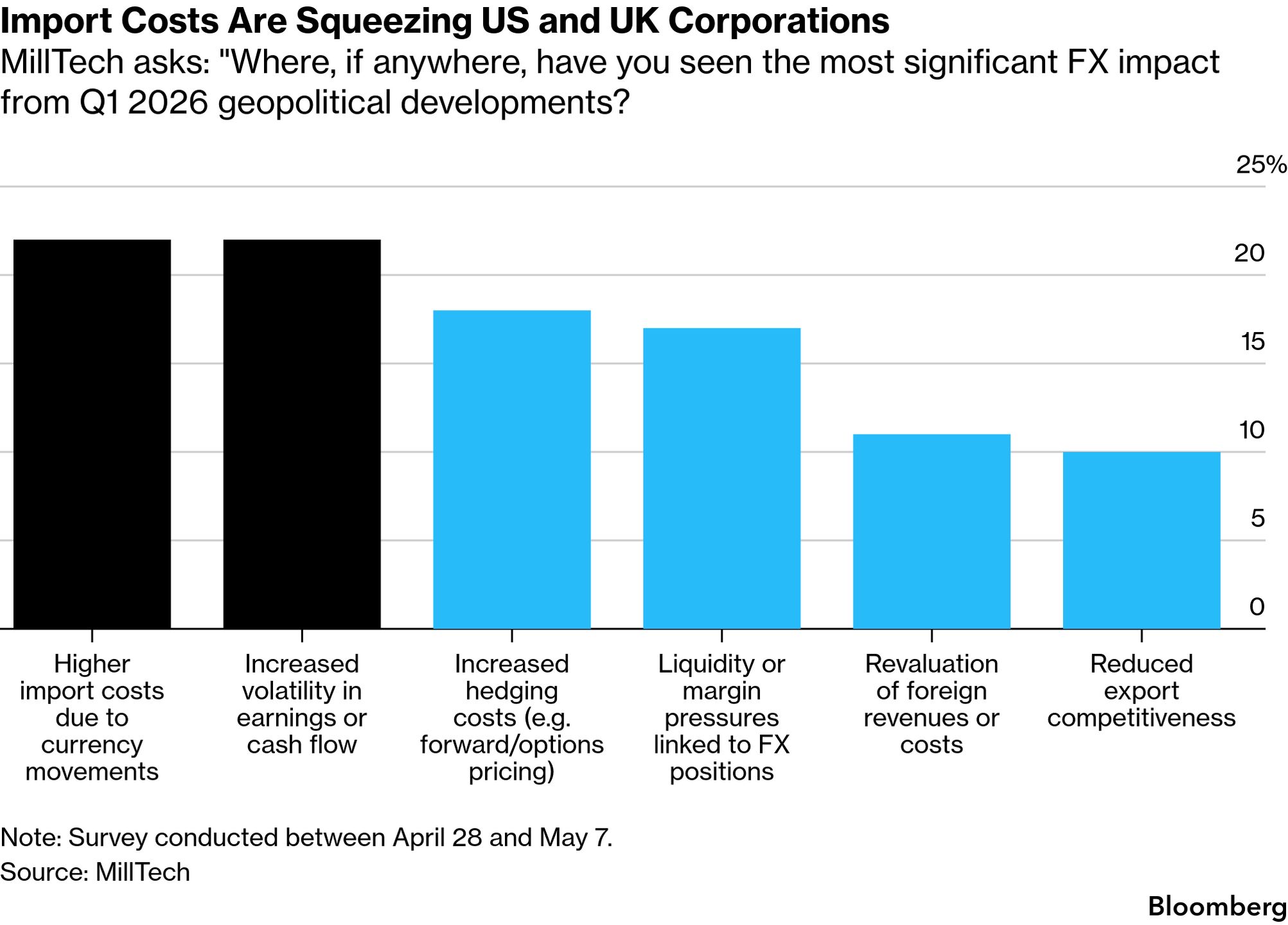
The biggest currency-related impacts they cited came from higher import costs related to exchange-rate movements, and increased volatility in earnings and cash flow. Companies also citing increased hedging costs, which are a function of broader shifts in relative interest rates.
While geopolitical shocks and market turbulence increased demand for currency hedging, the companies said the availability of credit remained the most important external factor shaping hedging decisions.
Those hedges, commonly structured as forwards, swaps and options, consume bank credit lines and can trigger collateral requirements. Because companies often transact with the same banks that provide revolving credit facilities, tighter lending conditions can make hedging more costly.
“In 2026, banks are continuing to tighten lending standards, making it harder for businesses to secure loans,” Huttman said, citing an April Fed survey of senior loan officers.