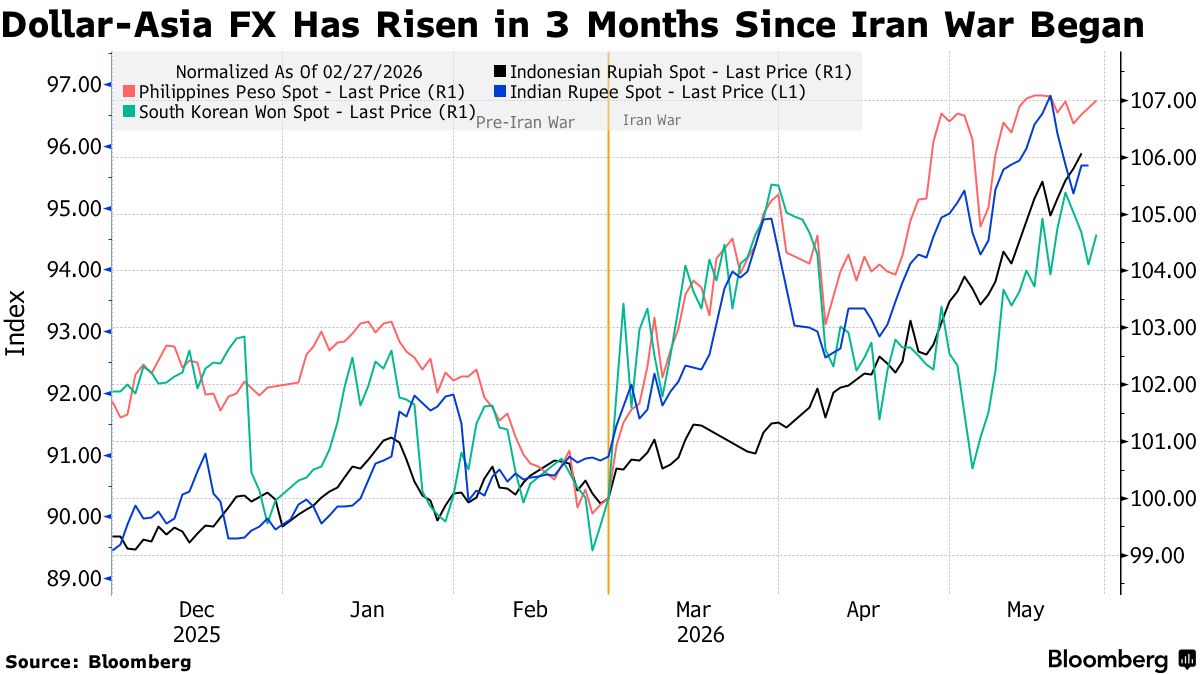
Aggressive Asia Hikes Show Few Signs of Stabilizing Currencies
Asian central banks are turning to ever more aggressive interest-rate hikes to shore up currencies, though there are few signs of success.
The Sri Lankan rupee advanced more than 1% after a 100-basis-point increase this week, but it has since surrendered those gains and was down about 0.5% as of Friday. Similarly, the Indonesian rupiah strengthened after a surprise last week, only to fall thereafter to another record low.
Pakistan’s rupee has remained stable after officials with a hike of similar magnitude in April.
“There’s only so much central banks can do to support currencies,” said Eugenia Victorino , head of Asia strategy at Skandinaviska Enskilda Banken in Singapore. “The real issue is Asia’s high reliance on imported oil. Global energy supply and prices cannot be influenced by central banks, so they’re in a bit of a bind.”
Asian central banks are leading the world in raising borrowing costs, with India’s policy decision next week a key focus. The Reserve Bank of India is expected to hold rates, according to a , even as the currency has fallen to successive record lows this month.
Philippine central bank Governor Eli Remolona said last week that officials are considering before the next policy meeting on June 18. The peso fell to an all-time low this month.
Policymakers in developed nations are also signaling aggressive moves. New Zealand Assistant Governor Karen Silk on Friday said all options will be on the table, including a , for its next meeting in July.
“Rate hikes do not fix an oil import bill,” said Kenneth Goh , director of private wealth management at UOB Kay Hian Pte in Singapore. A real rebound in the Philippine peso, rupiah and rupee will ultimately depend on oil easing and not on rate hikes, he said.