South Korea Unveils Measures to Stem Won Slide, Curb Speculation
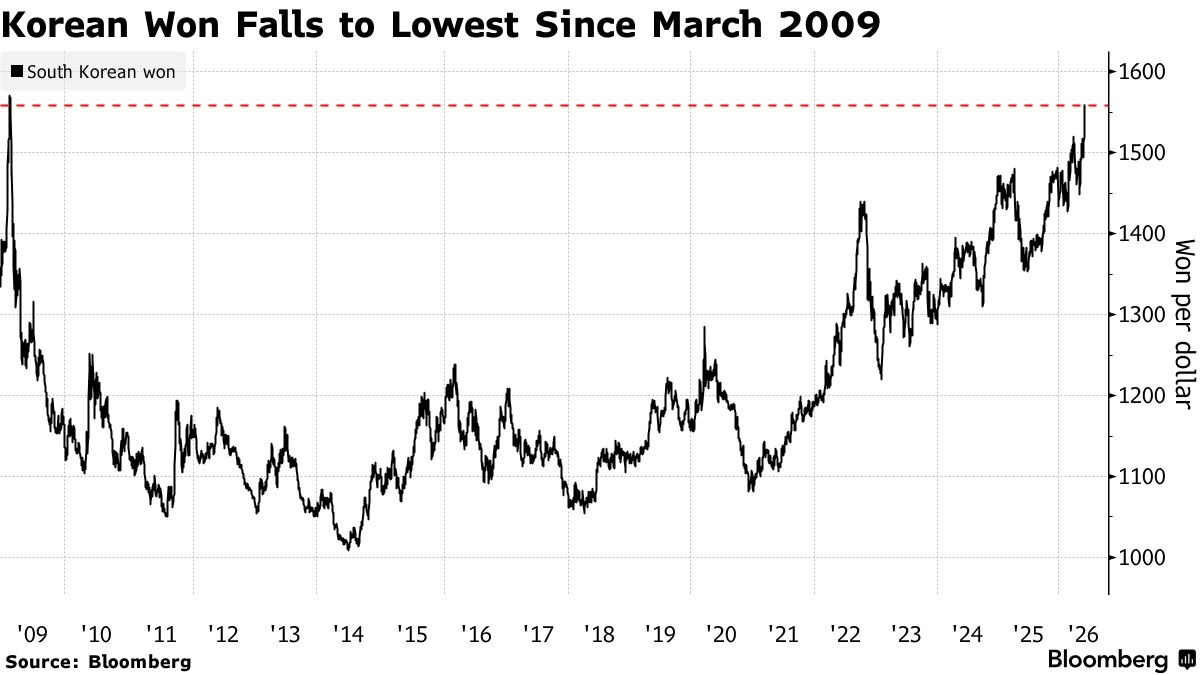
South Korea laid out a series of targeted measures to curb pressure on the won after the currency slid to its weakest level since 2009, pledging firm action against speculative trading and other activities that authorities said had amplified recent market swings.
Deputy Prime Minister and Finance Minister Koo Yun Cheol convened an emergency market-review meeting at 2 p.m. Sunday with Bank of Korea Governor Shin Hyun Song , Financial Services Commission Chairman Lee Eok-won and Financial Supervisory Service Governor Lee Chan-jin, the finance ministry said in a statement.
The officials agreed they “will not tolerate excessive volatility or one-sided moves” in the foreign-exchange market, saying speculative transactions had accelerated herd behavior.
The move comes as policymakers across Asia step up efforts to support their currencies amid heightened geopolitical tensions, rising energy costs and a stronger dollar. Indonesia and are among countries that have intervened in recent weeks to slow currency declines.
The won dropped as much as 2% to 1,562.2 during Friday’s session, its weakest level since March 2009, despite government jawboning a day earlier. The currency has fallen more than 7.5% this year.
Rather than simply warning against excessive market moves, Seoul this time unveiled a detailed response plan that includes tighter scrutiny of offshore currency derivatives, inspections targeting suspected market misconduct, and investigations into potentially illegal FX transactions.
Authorities will examine trading in offshore non-deliverable forwards, saying one-sided positioning in the market has influenced domestic currency trading. They also pledged to improve transparency and explore ways to encourage more trading to shift into the onshore market.
The central bank and the FSS will conduct inspections to determine whether speculative activity or suspected market manipulation contributed to the won’s weakness, with strict action to follow if violations are identified.
Regulators will also investigate whether exporters and importers illegally accelerated import payments or delayed export receipts to benefit from the currency’s depreciation.
The government will maintain round-the-clock monitoring of financial markets and swiftly implement the measures agreed on Sunday, Koo said. He also warned that volatility could intensify again depending on developments in the Middle East conflict and the outlook for US inflation.
The officials maintained that South Korea’s economic fundamentals remain solid, citing continued upgrades to earnings forecasts for semiconductor companies and related industries as well as a widening current-account surplus.
South Korea’s latest measures add to a series of efforts aimed at stabilizing FX markets, including allowing the to expand FX hedging and easing regulations to improve dollar liquidity.
Koo said Thursday that authorities were FX market developments “with a high degree of vigilance to prevent anxiety from spreading” and vowed to “take prompt, necessary measures in case of excessive market moves.”