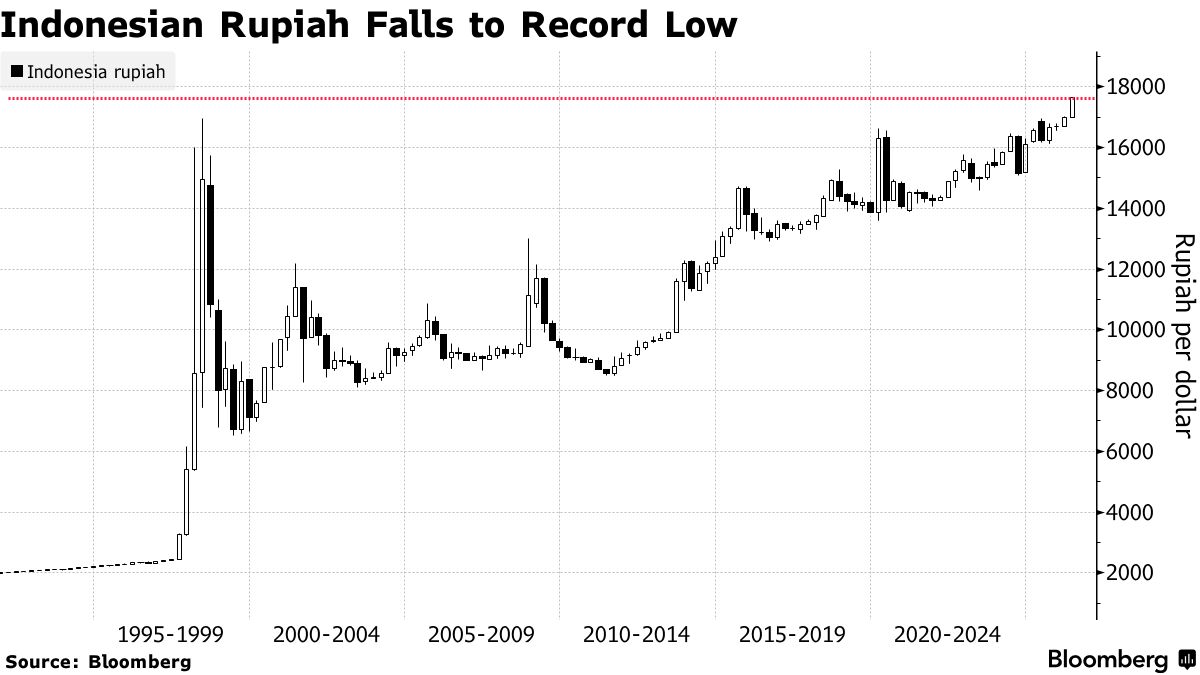
Indonesia Joins Global Market Rout, Rupiah Hits Record Low
The Indonesian rupiah fell to a record low, while stocks dropped and bond yields climbed as trading resumed after a two-day holiday, with local markets swept up in a global selloff fueled by inflation fears.
The rupiah dropped as much as 1.2% against the dollar on Monday, the worst performer in Asia. also fell while the benchmark 10-year bond yield climbed 17 basis points.
The drop in Indonesian assets echoed a broader selloff across energy-importing Asian markets, as fading hopes for a near-term end to the war stoked fears of prolong heightened oil prices and economic vulnerability.
“Investors have been concerned over Indonesia’s fiscal position due to the high energy subsidy bill,” said Khoon Goh , head of Asia research at Australia & New Zealand Banking Group. Higher global yields are adding “pressure on the rupiah as domestic yields will need to rise to make it attractive enough for foreign inflows to be maintained,” he said, forecasting an interest-rate hike on Wednesday.
Investor sentiment in Indonesia has turned increasingly cautious amid mounting headwinds in recent months, including uncertainties over a possible equities reclassification to frontier markets as well as Fitch Ratings and Moody’s Ratings both cutting their credit rating outlooks to negative. The currency has fallen more than 5% this year, making it Asia’s second-worst performer after the Indian rupee and adding to the pressure on policymakers to shore up stability.
Against that backdrop, Bank Indonesia said it will step up intervention to stabilize the currency, while ensuring that it has “more than adequate” foreign-exchange reserves. Governor Perry Warjiyo said at a parliament hearing in Jakarta on Monday that the rupiah could strengthen to average 16,500 per dollar this year as domestic dollar demand pressure subsides.
The central bank has also been selling short-term government bonds and buying long-term bonds to help steady yields, he added. The currency closed down 1.1% to 17,656.
Even so, some analysts question the effectiveness of those measures at a time when the rupiah is being hit by oil-price shocks and concerns over domestic fiscal policies.
President Prabowo Subianto said over the weekend that there was no need to worry about the weakening rupiah because villagers do not use dollars in their daily lives.
Indonesian assets’ underperformance versus regional peers likely reflected weaker domestic fundamentals and continued investor caution, said Fesa Wibawa , investment manager at Aberdeen Group Plc.
“Positioning in Indonesian government bonds already looks light based on recent price action, but there are limited signs of foreign investors re-engaging meaningfully at this stage,” he said. “For now, markets are closely watching developments in monetary policy and the fiscal outlook, which remain key anchors for confidence in Indonesian assets.”
The weak rupiah added pressure on Indonesian equities, which have fallen some 24% this year. Stocks tied to some of the country’s richest billionaires extended losses on Monday, weighing on the Jakarta Composite Index after MSCI Inc. dropped them from its indexes during last week’s quarterly review.
PT Amman Mineral Internasional, PT Dian Swastatika Sentosa and PT Chandra Asri Pacific all fell by their 15% daily limit.
“Markets are still digesting recent policy uncertainties,” said Felix Darmawan , an analyst at BCA Sekuritas. A broader risk-off tone is weighing on both the rupiah and emerging-market assets, he added.