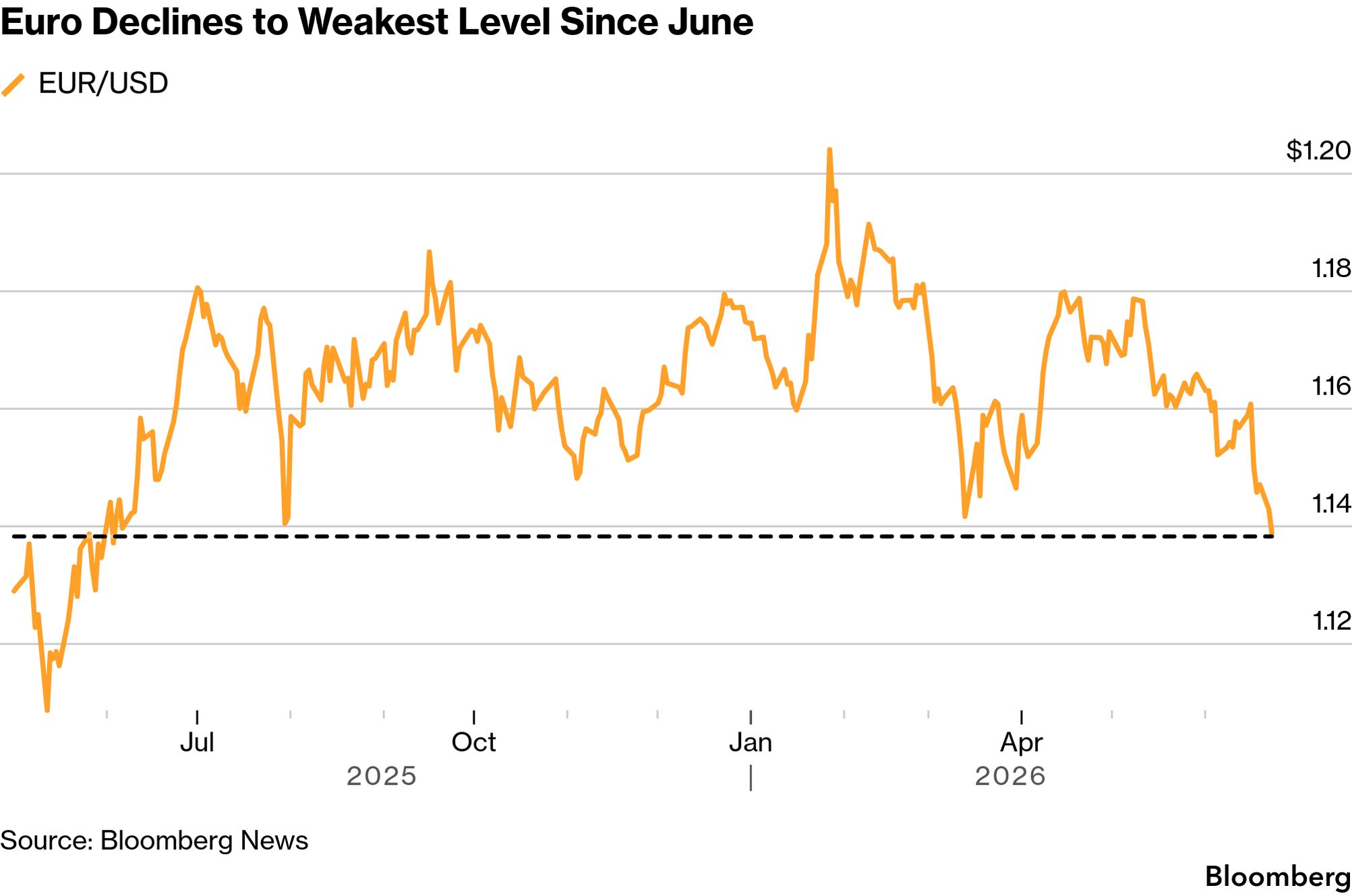
Euro Weakest in a Year as Lagarde’s Talk Diverges From Fed
The euro fell to its lowest level since June of last year after weak economic data and dovish comments from European Central Bank President Christine Lagarde prompted traders to pare back their bets on interest-rate hikes.
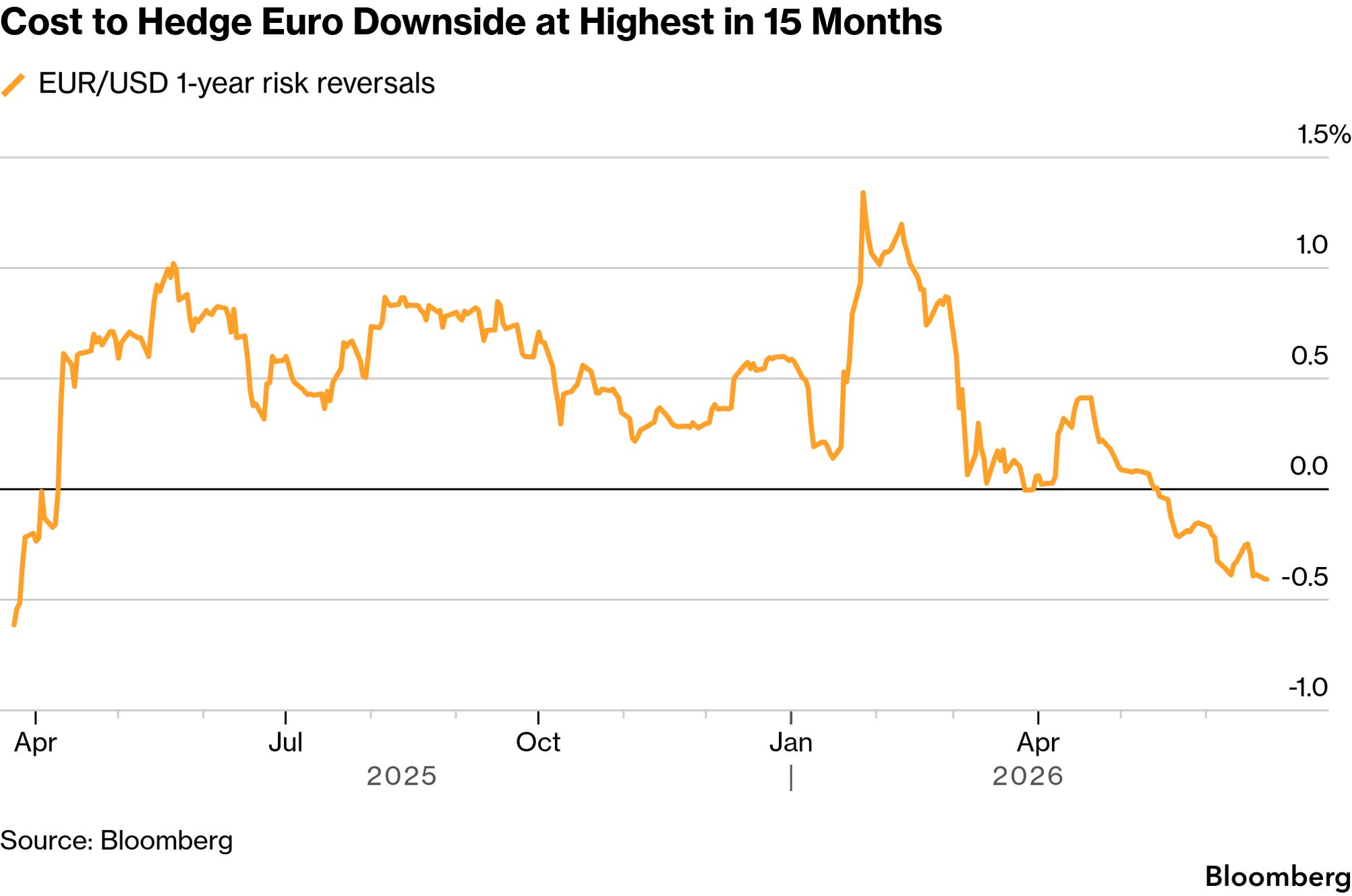
The common currency fell as much as 0.5% to a session low of $1.1376 on Tuesday, after indicated German private sector and French business activity shrank in June. The cost to hedge against euro declines for the coming year has reached the highest since March 2025.
“If the euro closes below $1.14 today, then there is room for a deeper correction,” said Andrew Hazlett , a foreign-exchange trader at Monex Inc.
The economic numbers came after Lagarde said on Monday she sees no need for a more forceful response by the ECB to the Iran war. Her remarks contrasted with Federal Reserve Chairman Kevin Warsh signaling a on inflation last week, which boosted the dollar.
Lagarde’s “rare dovish-leaning” comments were significant, because the ECB has “mostly tried to endorse the market’s hawkish bets in the past three months,” said ING Groep NV currency strategist Francesco Pesole .
Trading data from the Depository Trust & Clearing Corporation show euro-dollar options activity surged last week to the highest in three months, with roughly 60% of interest tied to bets on a stronger dollar.
Earlier this month, the ECB raised interest rates by a quarter point, though that provided only modest euro support as the move had been expected.
“Euro could very easily reach 1.10 if it conclusively breaks key 1.14 support,” Morgan Stanley strategists said in a research report Tuesday.
“Medium-term investors will likely unwind their structural dollar shorts while speculative investors could pile on as momentum picks up,” strategists including David Adams and Andrew Watrous wrote, adding that the risk of an overshoot lower can’t be ignored.
Traders now see the Fed raising rates nearly two times through March. Chicago Fed President Austan Goolsbee said he remains and questioned whether all the factors driving prices up are temporary.
The cost to protect against euro losses for the coming year reached levels unseen since before Trump’s announcement of Liberation Day tariffs. On Tuesday, one-year risk reversals on the euro-dollar pair traded at 0.41% in favor of puts, options pricing shows.
Traders are now paying much more for put options that bet on euro-dollar going lower over the next 12 months, than calls that look for the pair to rise over the same time frame. The premium of puts of calls has kept widening over the past two months.
JPMorgan last week cut its year-end 2026 forecast for EUR/USD to 1.13 and set 1.10 as a target for mid-2027.
Looking back at the last four Fed hiking cycles, the euro has declined against the dollar by as much as 15% on average before the first US rate increase, Meera Chandan , co-head of global FX strategy at JPMorgan, said Tuesday.