Historic Yen Slide Poses New Risk to Japan Stocks’ Bull Run
The yen’s relentless slide is raising concern that it risks eventually curbing the foreign inflows that have helped propel Japanese equities to record highs.
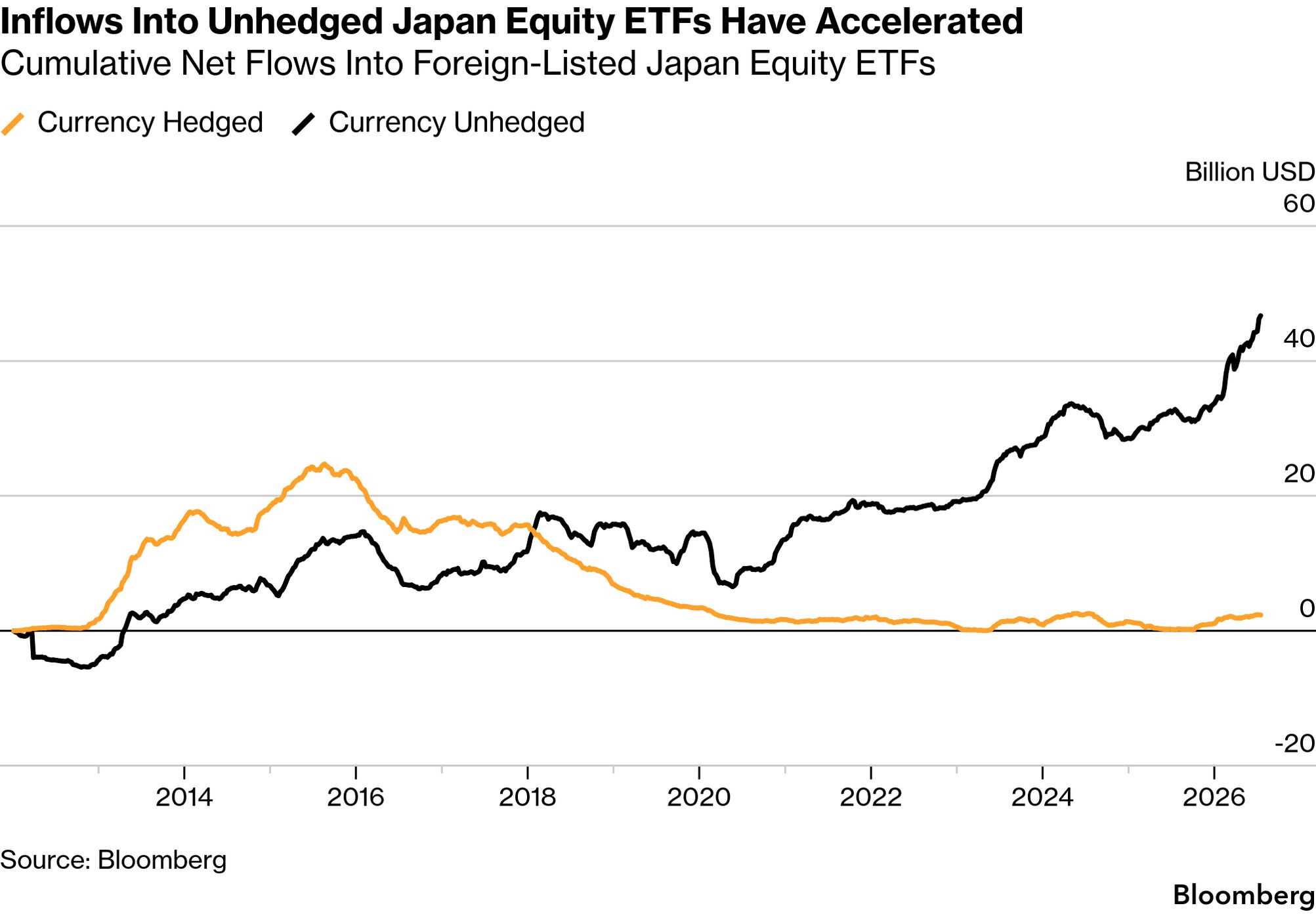
For now, overseas-listed exchange-traded funds — widely seen as a gauge of foreign demand — continue to point to robust appetite for Japanese equities. Japan equity ETFs which invest on an unhedged basis have seen rising interest in recent years, drawing a cumulative net inflow of $47 billion, according to data compiled by Bloomberg, while comparable currency-hedged products have seen outflows.
Yet strategists warn that the picture could quickly change. Pension funds and long-only asset managers often don’t hedge currency exposure, leaving returns increasingly vulnerable as the yen weakens. That raises questions over how much further the currency can fall before exchange-rate losses begin to outweigh the appeal of Japanese equities.
“Currency risk is one of the key concerns for Japanese stocks,” said Richard Kaye , co-head of Japan equity strategy at Comgest Asset Management. While Japan remains attractive for global investors seeking AI exposure outside the US, a weakening yen becomes increasingly difficult to ignore for those that leave currency exposure largely unhedged.
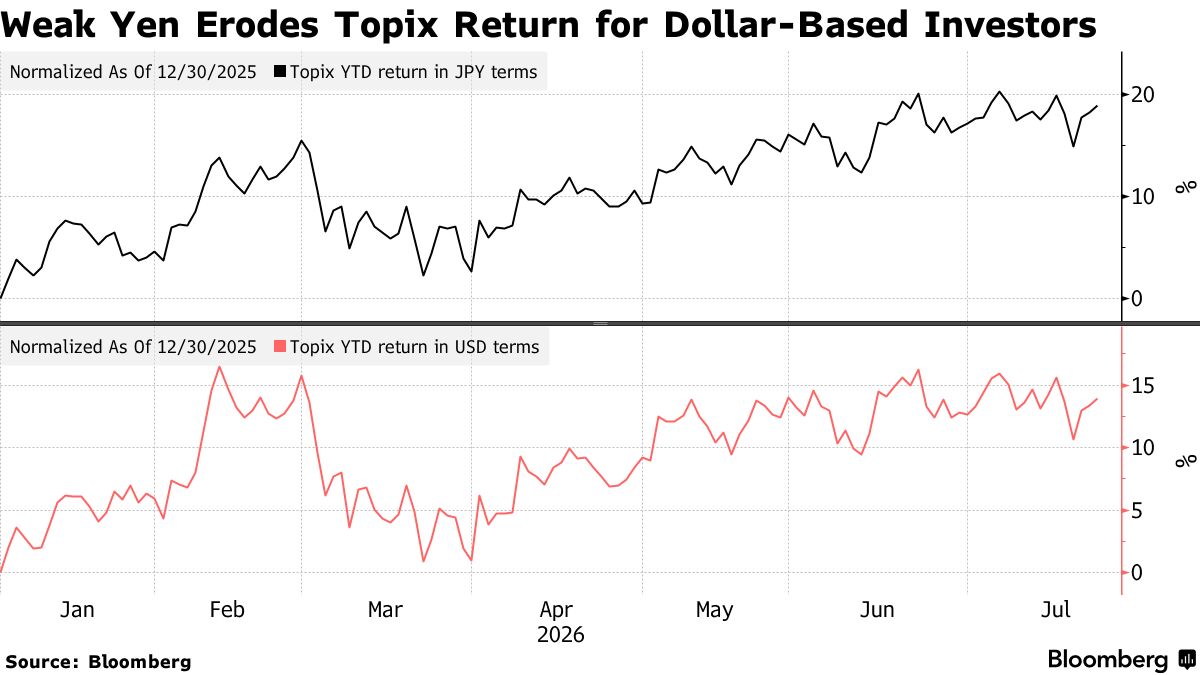
The Topix has climbed 19% this year to record highs. In dollar terms, however, the gain shrinks to 14% because the yen has weakened beyond , its lowest level since 1986, weighed by persistent interest-rate differentials and concerns over Japan’s fiscal outlook.
The growing importance of overseas investors makes that currency effect harder to ignore. They a record 34.7% of Japanese equities at the end of March, according to exchange data, compared with 30.2% five years earlier. Since Prime Minister Sanae Takaichi won the party leadership election last October, overseas funds have been net buyers of more than ¥12 trillion ($74 billion) in cash equities .
The changing investor base also marks a sharp departure from previous foreign buying waves. During the early years of former Prime Minister Shinzo Abe’s administration, inflows were driven largely by shorter-term investors that typically hedged currency exposure, according to Yoshitaka Suda , senior cross-asset strategist at Nomura Singapore.
“By contrast, the current rally is being led by investors like pension funds that often do not hedge the currency,” Suda said. “From a flow perspective, yen weakness is no longer as unequivocally positive for Japanese equities as it once was.”
To be sure, a weaker yen continues to support corporate earnings of exporters. Bloomberg show Japan’s major automakers would collectively earn more than ¥900 billion in additional profit if the currency remains near current levels.
Still, “as the yen hits historic lows and the perception grows that the currency’s depreciation shows no signs of stopping, this could lead to a trend of holding off on buying for unhedged investors until the exchange rate stabilizes,” said Kazunori Tatebe , chief strategist at Daiwa Asset Management Co.