Options Flash Bearish Yen Signal as Tokyo Stays on the Sidelines
The options market is sending a bearish signal on the yen, with interest-rate differentials remaining firmly in favor of the dollar and the Japanese authorities avoiding intervention for now.
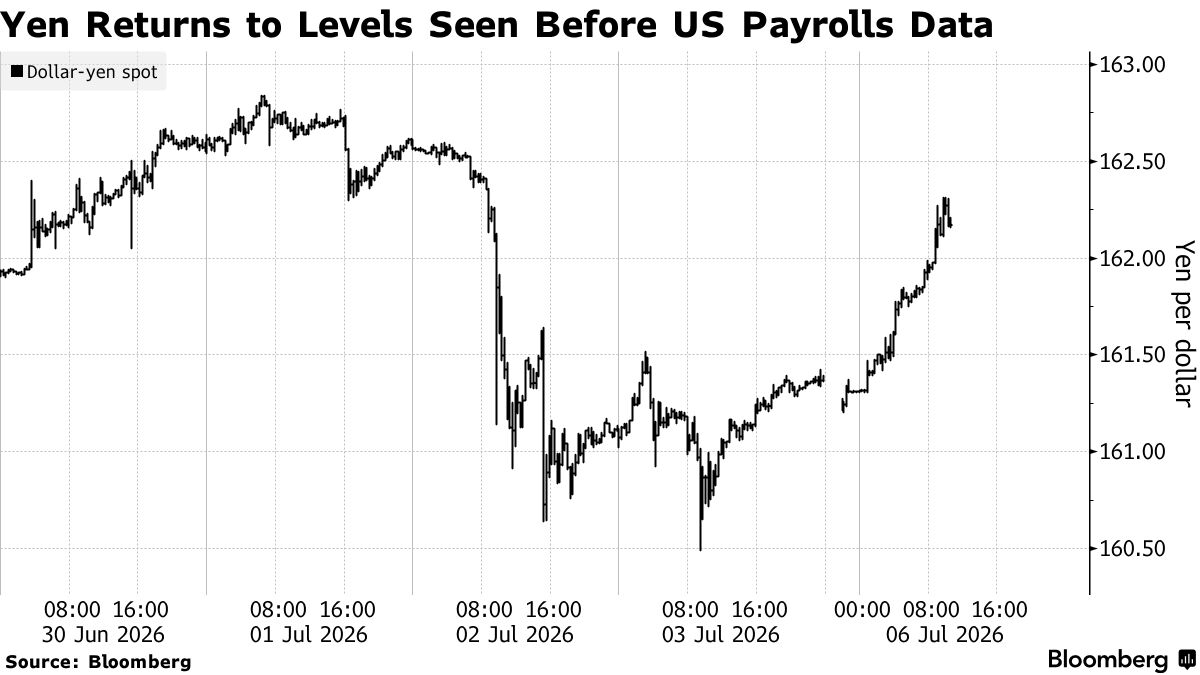
One-year options sentiment briefly moved in favor of the dollar on Monday for the first time in more than three years. The Japanese currency fell 0.6% to 162.31 per dollar, almost erasing gains that followed softer-than-expected US payrolls data last week.
Traders had paid up to sharp yen moves before the US holiday, when thin liquidity was seen increasing the risk of market intervention the support the currency. But with Japanese officials staying on the sidelines, the yen faced a fresh round of selling.
“The dollar seems to have dodged the bullet of large-scale Japanese FX intervention, after a no-show from the Bank of Japan in holiday-thinned conditions last week,” said Chris Turner , head of foreign-exchange strategy at ING Bank NV. That’s a reminder that Tokyo wants to use its currency reserves cautiously, he said, adding that the next window for intervention could be July 16-17, ahead of the next public holiday in Japan.
The risk of action by the Japanese authorities remains embedded in short-dated options, though it has eased from recent extremes. One-week risk reversals trade around 248 basis points against the dollar, reflecting demand for protection against short-term yen strengthening. That compares with a May peak of 316 basis points.
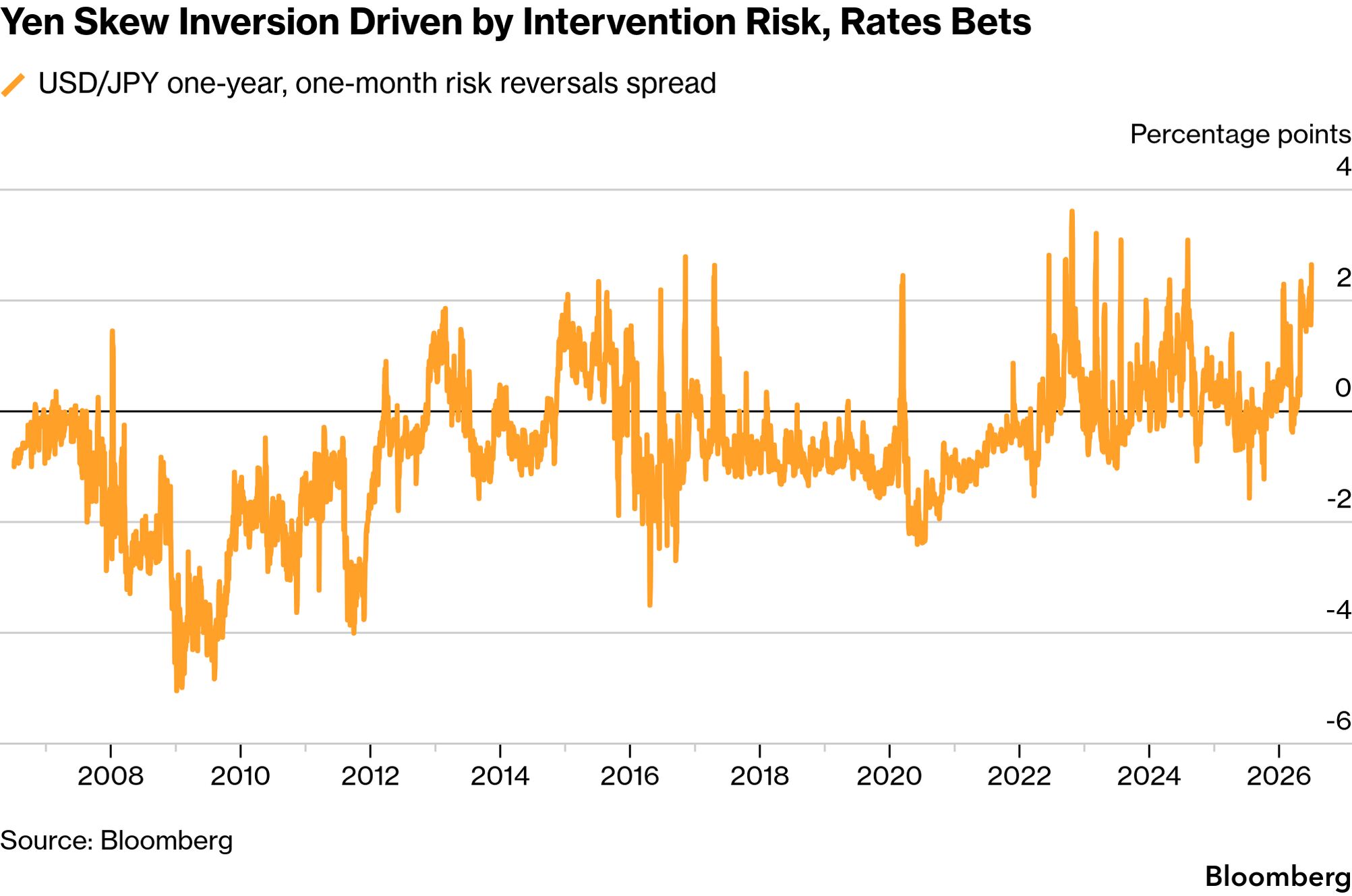
But while the front end still reflects intervention hedging, one-year risk reversals briefly favored dollar calls for the first time since late 2022, pointing to renewed conviction that the yen will stay under pressure over the longer term.
The spread between the two tenors has widened to more than 250 basis points, a level rarely seen in data going back to 2008. Similar extreme readings have historically clustered around intervention-type episodes.
Goldman Sachs Group Inc. strategists revised their dollar-yen forecast higher to 165 in a year’s time, from 155 previously, as they see upward pressure persisting without an unexpected negative US growth shock or BOJ pivot toward more aggressive policy tightening.
Money markets price about 30 basis points of Federal Reserve rate increases by year-end and 23 basis points from the Bank of Japan, suggesting interest-rate differentials will continue to offer little support for the Japanese currency.
According to Tatsuo Yamasaki , a former top foreign exchange official in Japan, the yen should be as much as than it is. “This isn’t about fundamentals anymore — it’s about how people’s expectations have shifted,” he said.