Why the Value of China’s Yuan Is Drawing Scrutiny in Europe
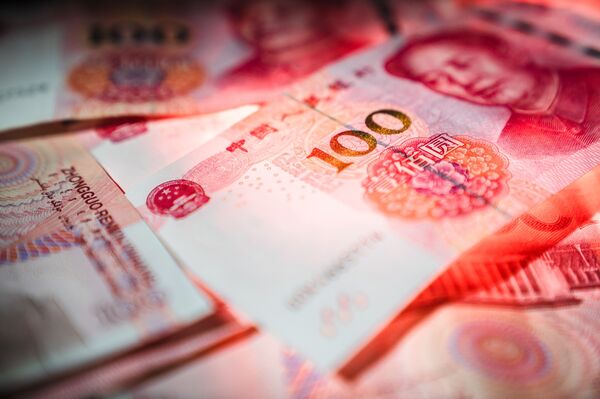
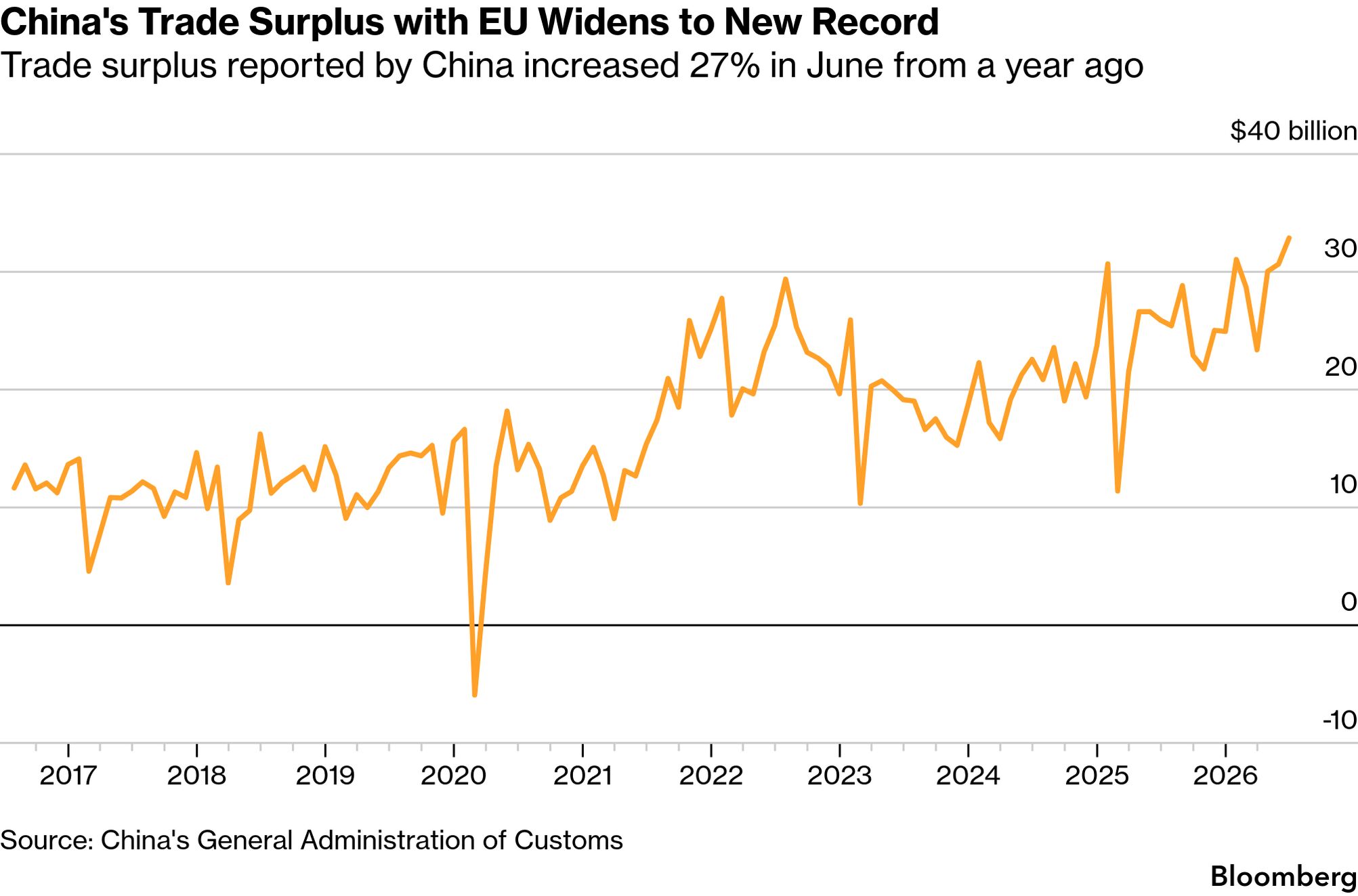
The value of the yuan has become a flashpoint in trade relations between China and the European Union. Many EU policymakers and economists believe the currency is undervalued and a key driver of the bloc’s deepening trade deficit with the East Asian nation. That imbalance averaged about $1.1 billion a day in June.
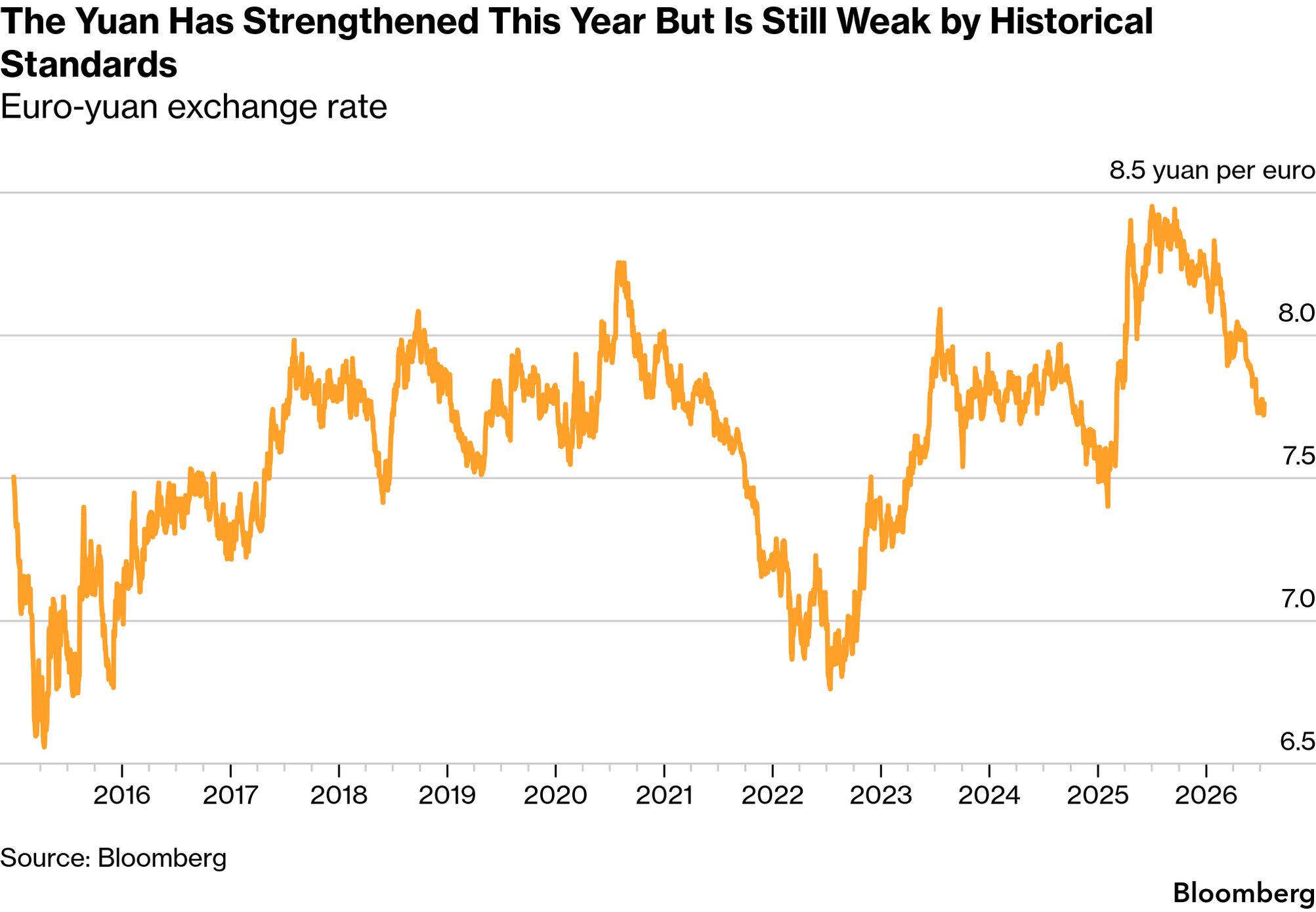
The yuan has strengthened versus the euro over the past 12 months, rising by around 9% as of late July. But it remains some way off its 2015 peak. As European industries struggle to compete with an influx of cheaper Chinese goods, there are increasing calls emerging from Europe for China to allow its currency to appreciate by about 20% to 30% to level the playing field.
But there’s no consensus on the yuan’s fair value. And in China, there’s the government is willing to engineer a sharp appreciation while economic conditions are weak. This, along with other disagreements with China, leaves the EU with a dilemma of how to rebalance its relationship with a country that’s both a strategic rival and essential trading partner. The two sides have set an to make progress on their trade disagreements.
Is the yuan undervalued?
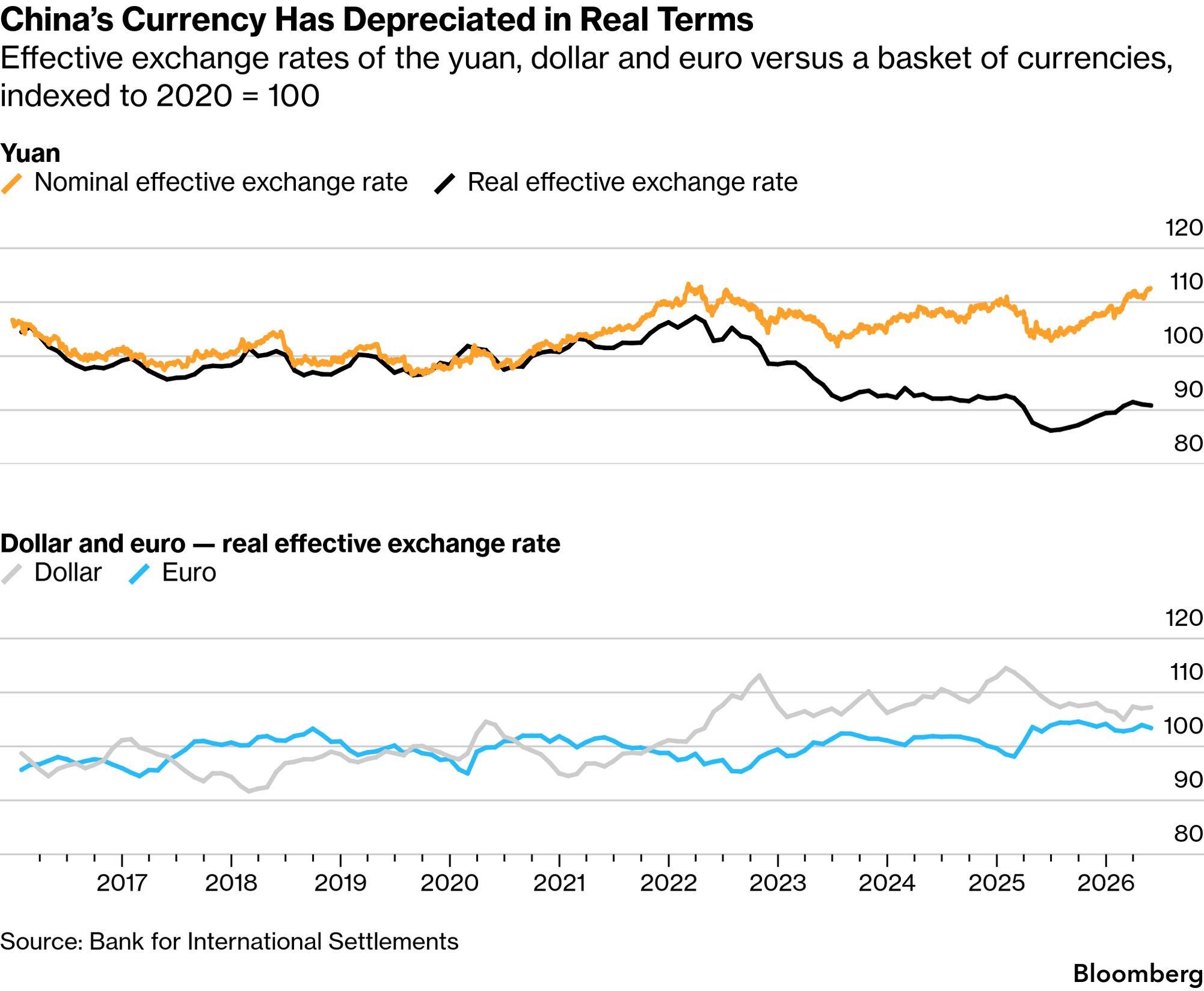
While the yuan has strengthened on a nominal basis — reaching a record high in June based on the Bank for International Settlements’ effective exchange rate gauge — the currency is still widely viewed as undervalued in real terms. Its real effective exchange rate (REER), which is measured against a basket of partners’ currencies and adjusted for inflation, has declined over the past decade, while those of the dollar and euro have risen.
The International Monetary Fund estimated China’s REER was 12% to 20% undervalued in 2025. In June, former US Treasury official Brad Setser argued the yuan may be more than 20% undervalued, while around the same time, , Goldman Sachs and Bank of America each put the figure at somewhere between 10% and 20% using different valuation models. A strategist from Australia & New Zealand Banking Group, by contrast, sees little evidence of nominal undervaluation.
Many Chinese economists reject the view that the yuan is misvalued, arguing that valuation models overstate the importance of China’s trade surplus while failing to adequately account for other market forces on the exchange rate,
What role does China play in managing the yuan?
China maintains a “managed float” of the yuan, allowing authorities to exert significant influence over the exchange rate. The People’s Bank of China sets a daily reference rate, or fixing , and then allows the currency to trade within 2% above or below it. The central bank says its aim is to keep the currency basically and prevent volatility.
China has a number of tools at its disposal to keep the currency stable — some more transparent than others. One method is adjusting the amount of foreign currency that banks are required to hold as reserves, which can influence demand for the yuan. State-owned banks also step in to buy dollars to weaken the yuan or sell dollars to support it.
The PBOC has acted to limit volatility in both directions in recent years. It supported the yuan during periods of heavy depreciation in 2022 and 2023, and in early 2026 it unwound some of the measures it had introduced to support the currency after it strengthened.
Some of the less transparent methods have, however, fueled accusations that Beijing keeps the currency artificially weak, to give Chinese exporters an edge over rivals. The central bank rejects that characterization, saying it’s ultimately the the exchange rate.
Why is the EU concerned about the value of the yuan?
A relatively weaker currency means a country’s goods are cheaper for foreign buyers. At the same time, imports are more expensive. This can , whereby the value of a nation’s exports exceeds the value of its imports.
Some economists and European policymakers argue that the yuan’s relatively low value has given Chinese exporters an additional competitive advantage. Exports have become an increasingly important driver of China’s economic growth, and the country’s trade surplus with the EU hit a in June, according to Chinese customs data.
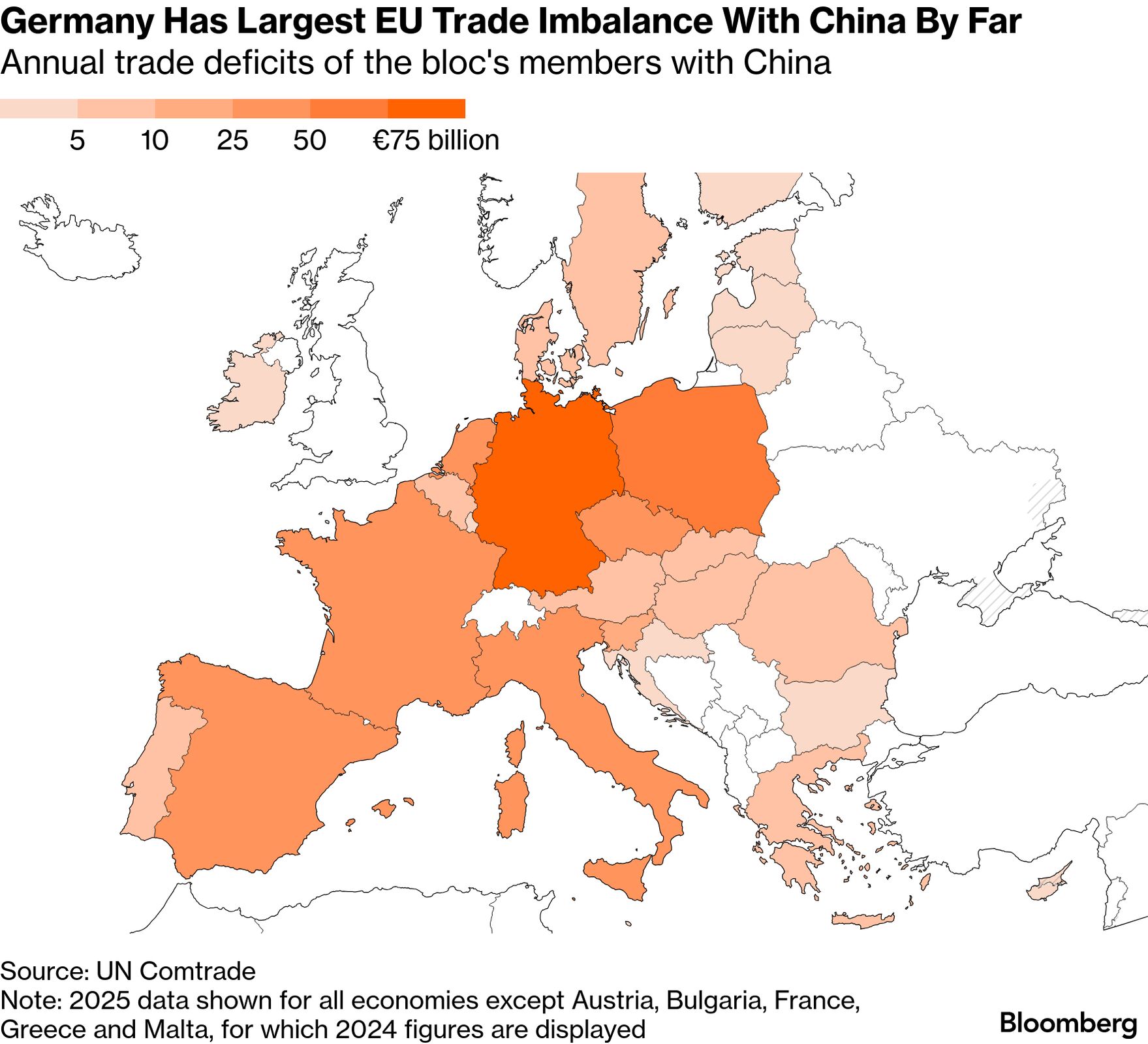
Germany has the EU’s biggest trade deficit with China, amounting to around €95 billion last year, and its manufacturers, in particular automakers, have come under increasing pressure from Chinese competition.
China’s trade surplus took off during the Covid-19 pandemic as Europeans bought more goods to adapt to lockdowns and working from home. More recently, US tariffs have prompted Chinese exporters to redirect their shipments to other markets, such as Europe and Southeast Asia. Meanwhile, China’s imports have flatlined over time, making the trade relationship with the EU ever more lopsided.
The growing imbalance is a source of tension as European firms face increased pressure at home from low-cost Chinese goods. At the same time, they’re struggling to sell to China and also face greater competition in other overseas markets as Chinese companies export more to the rest of the world.
What is being proposed in Europe?
Some European policymakers argue that a stronger yuan is needed to help narrow China’s trade advantage. Such an adjustment would make Chinese exports more expensive in Europe and European goods cheaper in China. Although this could help to reduce some of the imbalance, some economists say that this alone would not solve Europe’s competitiveness problem.
Nevertheless the idea has gained some traction in Europe. An advisory body to the French government that the EU should consider a blanket 30% duty on imports from China or seek a 20% to 30% depreciation of the euro versus the yuan to rebalance trade flows.
A May by the Centre for European Reform said a “revaluation” of the Chinese currency would be an “immediate fix” for the trade imbalance, citing an alleged yuan undervaluation of as much as 30%.
More recently, German Chancellor Friedrich Merz and French President Emmanuel Macron with Beijing on the issue of the yuan. Merz has also on exchange rates, even drawing on the 1985 Plaza Accord as a possible model for addressing currency imbalances. Under that agreement, the US, Japan, West Germany, France and the UK coordinated policies to weaken the US dollar against their currencies in an effort to improve US export competitiveness and narrow the country’s trade deficit.
In June, European Central Bank President Christine Lagarde played down the idea of a modern-day Plaza Accord to drive a sharp appreciation of the yuan, arguing that today’s situation is “vastly different.” The EU’s broader strategy to rebalance trade ties with China involves developing fresh for firms to diversify their supply chains while making better use of existing trade tools such as anti-subsidy investigations, tariffs and import quotas.
Despite signs the EU is willing to on China, the bloc remains wary of sparking a trade war with the world’s second-largest economy. Beijing has repeatedly against trade barriers, which would endanger European access to a pivotal market and to key inputs such as chips and critical minerals. The risks of a confrontation became clear last year, when China tightened controls over rare earths in response to US tariffs. The resulting supply disruptions forced a number of European companies to .
What is China’s position on strengthening the yuan?
Some Chinese economists and former central bank officials have that a stronger yuan is needed if the country is to rebalance the economy away from export-dependent growth and reduce tensions with trade partners. An appreciation of the yuan would increase people’s purchasing power and make imported goods less expensive, which could boost tepid consumer spending.
The PBOC has signaled a for a modest appreciation in the value of the yuan. In mid-July, it set its fixing rate at the since 2023. Still, it doesn’t mean it’s open to a faster rally or sharp appreciation — and China’s government is highly unlikely to agree to a Plaza Accord-style deal. The PBOC didn’t reply to a Bloomberg fax seeking comment.
Part of its reluctance stems from how it views Japan’s experience after the 1985 accord. Many Chinese policymakers and economists believe the yen’s rapid appreciation contributed to Japan’s asset-price bubble and the decades of weak economic growth that followed. Some also believe the accord was a effort by the US to boost its own economy at the expense of others, rather than a purely economic agreement. That perception has reinforced China’s determination to defend “ ” and maintain control over its own economic policies.
China has instead tried to focus trade talks with the EU on how to increase imports from the bloc and expand access to the Chinese market, rather than measures that would affect its own exports.
Is the EU alone in its concerns about the yuan?
US President Donald Trump has a long history of accusing China of having an unfair, mercantilist exchange-rate policy. During his first term in office, his administration briefly the nation a currency manipulator, dropping the label after a bilateral trade deal was negotiated.
The US Treasury’s semiannual foreign exchange said in January that the yuan was “ ” and called on Chinese authorities to allow the exchange rate to strengthen “in a timely and orderly manner in line with market pressure and macroeconomic fundamentals.” The Treasury didn’t classify the currency as manipulated but said that it’s prepared to use this label if evidence suggests China is intervening through formal or informal channels to resist yuan appreciation.